Flip-a-Licious Slot Review
by PlaytechReleased Sep 12, 2026

Specifications
| Game Type | Instant Win |
|---|---|
| RTP | 96% |
| Volatility | High |
| Max Win | 8,192x |
| Min Bet | $0.1 |
| Max Bet | $100 |
Playtech ships a massive volume of games under its various marks, dropping eighty-five titles into casinos over the last year alone, with ten arriving in just the past thirty days. Out of the hundreds of titles we list from them, almost none carry a gamble feature, and a tiny fraction are set in a casino environment. That makes Flip-a-Licious an absolute outlier for the studio's LogicLabs arm. Most developers build a grid, add a bonus round, and hide a double-or-nothing button at the very end of a winning spin, the way Fazi does on Coink Bank. Playtech removes the slot completely. They ripped the gamble button off the cabinet, put it in an empty room, and charged admission just to press it. It's a bold move to sell the side bet as the main event.
Because the math is the entire product, there's no theme to get in the way. You get a dark slate-blue screen, a stack of coins, and a choice of heads or tails. A game that exists solely to halve your money or double it doesn't need a mascot, a backstory, or a soundtrack to distract you, and the studio deliberately left them out. Sitting in front of it feels like standing at a bare felt table while a dealer asks how brave you want to be. The silence is the point, leaving you alone with the odds and the creeping realization that the house always has the edge.
The machine runs on a flat 96.00% return to player, a figure that stays identical whether you play a board of fifteen, ten, five, or one coin. The ceiling sits at 8,192x your stake, and the game prints the odds of hitting that top prize at one in two billion.
Dealing the board
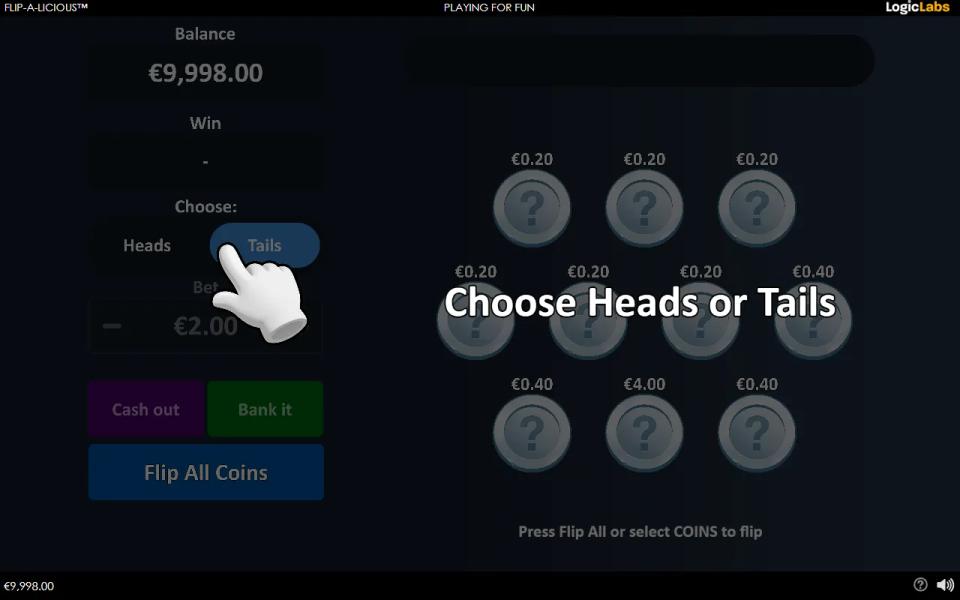
You pick your coin count, and the game deals cash values onto the board from a fixed list that ranges from a tenth of your stake up to a 500x prize. The smallest board guarantees a starting value equal to the entry cost, while larger setups mostly scatter the lowest values on the list with an occasional heavier piece mixed in. Before a single coin flips, the board holds significantly more than you paid to enter, routinely carrying more than three times the entry cost. That generous opening is the trap, because a fair flip is about to wipe out half of the board. The largest coin to appear across an hour of play was worth 2x, proving just how heavily the game relies on that initial attrition.
The first flip is pure survival. You call heads or tails, the coins land, and the ones that match your call survive while the losers vanish. Nothing doubles here; the survivors simply keep their dealt face value. First-flip casualties in a typical run leave you holding less than 2x, and a bad call on a medium board can wipe out the entire stake instantly. Cash out now, and you're taking whatever scraped through, which is rarely a profit.
Climbing the ladder
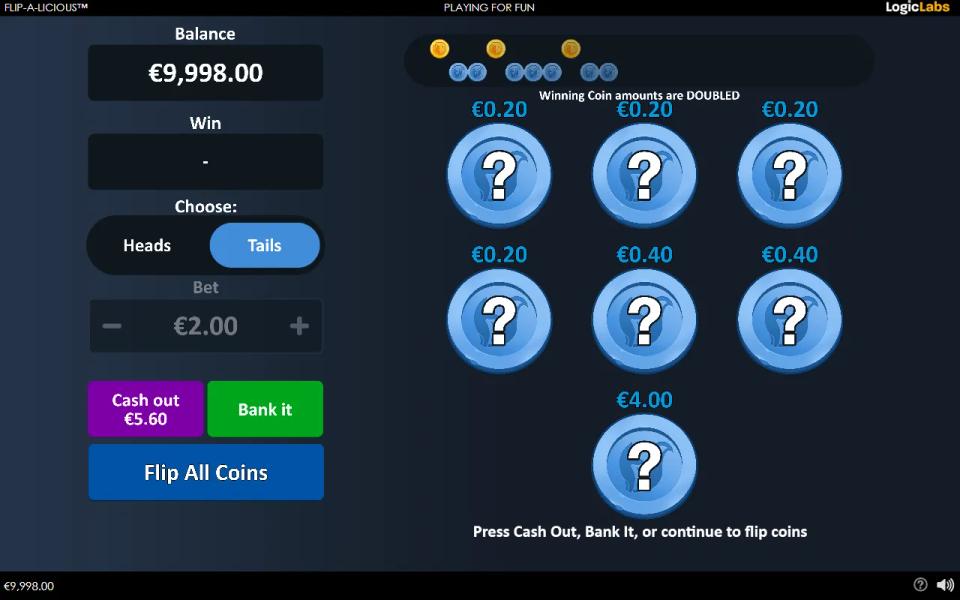
Only on the second flip does the game actually begin to multiply your money. Every survivor from here on out doubles in value, while another half of the board disappears. This is a brutal climb with no safety net. Pushing deep into the ladder usually means riding a few small coins until they either bust or limp to a tiny profit, like surviving four consecutive flips just to walk away with slightly over 3x. To offset that cliff edge, Playtech includes a mechanic called Bank It.
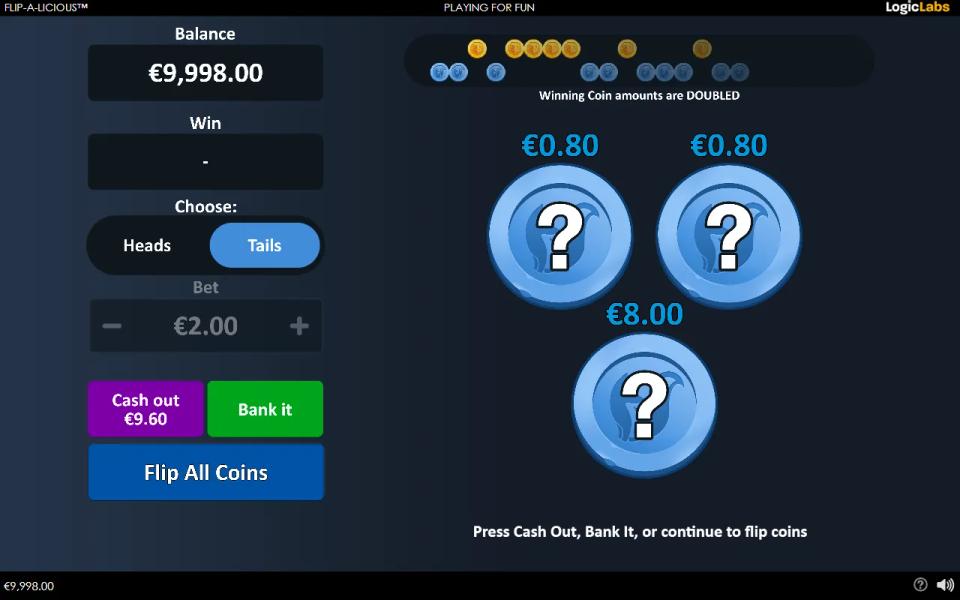
Between flips, you can select any surviving coin and lock its value into your win meter, securing that money regardless of what happens next. The restriction is that you must always leave at least one coin in play to take the next flip or to cash out. You can't bank the entire board. It's the only moment the game asks for a real decision. Locking in a heavy 4x coin while letting two pieces of small change ride the next flip guarantees a decent finish, turning a risky gamble into a safe payout of nearly 5x.
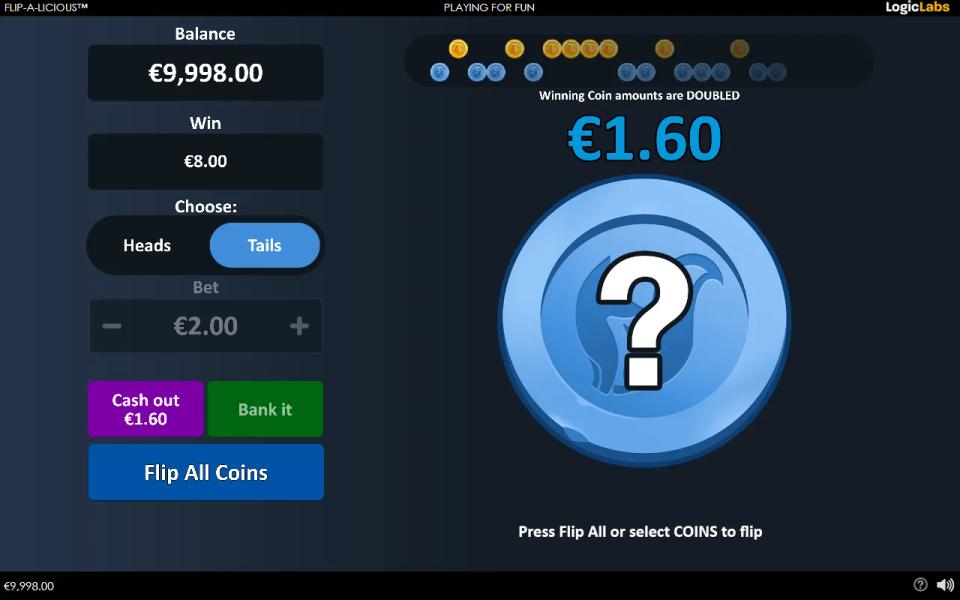
One piece of the interface demands a warning because it will cost you money if you misread it. The cash-out button is drawn in full colour the moment the board is dealt. It looks active, but clicking it before the first flip does absolutely nothing, as those dealt values aren't yours yet. Pressing it on a fresh board feels like the game has frozen, but it's just a poorly communicated lock.
The limits of the flip
Playtech has used the banking concept before, tucking it inside a grid on Red Wizard: Bank It Up, while the closest competitor is BGaming's Sugar Plinko, which also ditches the reels for a 10,000x ceiling and a 96.51% return but asks nothing of you but a click. What Flip-a-Licious does well is strip away the illusion of control, offering an entirely honest engine that delivers exactly what the tin promises. The 8,192x ceiling is a massive target compared to the studio's usual limits, dwarfed only by heavy hitters like Grizzly Blitz and its 13,373x cap, but it requires winning an even-money coin toss thirteen times in a row. The studio openly admits that playing a single coin offers your best shot at surviving that climb, which tells you everything about how punishing the attrition really is. A session that scraped back 96.4% of its entry costs landed where the stated figure says it should, which on sixteen games is a coincidence rather than a proof, and it still felt like an endless wait for a streak that refused to arrive. There's no feature building in the background and no sudden drop of premium symbols to save a bad run. A single decision is a thin reason to open a game.
Played and reviewed by the SlotsReach editorial team · Published 12 Sept 2026