Fortune Empire Slot Review
by Popok GamingReleased Jun 24, 2026
Specifications
| Game Type | Slots |
|---|---|
| RTP | 96.38% |
| Volatility | High |
| Max Win | 5,000x |
| Grid | 6x5 |
| Min Bet | $0.02 |
| Max Bet | $100 |
| Hit Freq | 32.87% |
Chasing the tumbling multiplier
PopOK Gaming has a fairly established habit of recycling its own math. Fortune Empire landed first, and seven weeks later TORnado PRAG arrived running the exact same skeleton. It is another online slot chasing the familiar tumbling multiplier format, and the two carry identical underlying numbers under different coats of paint.
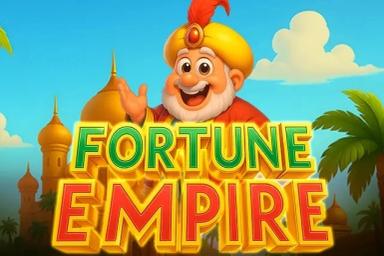
The premise is simple enough. A cheerful cartoon sultan waves from the sidelines while heavy gems and treasure chests clatter into the layout. It tries to project a kind of wealthy atmosphere, but the actual experience is mostly watching colorful stones dissolve into empty space without triggering any additional symbols to fall behind them.
The math model operates on a 6x5 matrix where symbols pay anywhere in view. Fortune Empire runs a 32.87% hit rate and a 96.38% return to player in the base game, dropping to 96.29% if you use the buy feature but rising to 96.66% with the Double Chance option armed. It accepts a minimum stake of 0.02 and carries a 5,000x max win.
Base game and the extra quarter
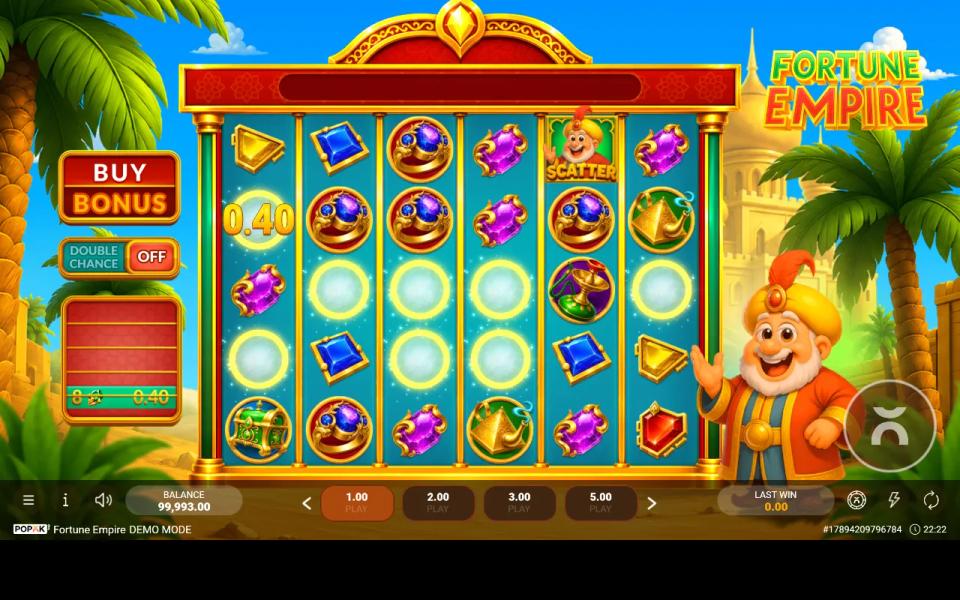
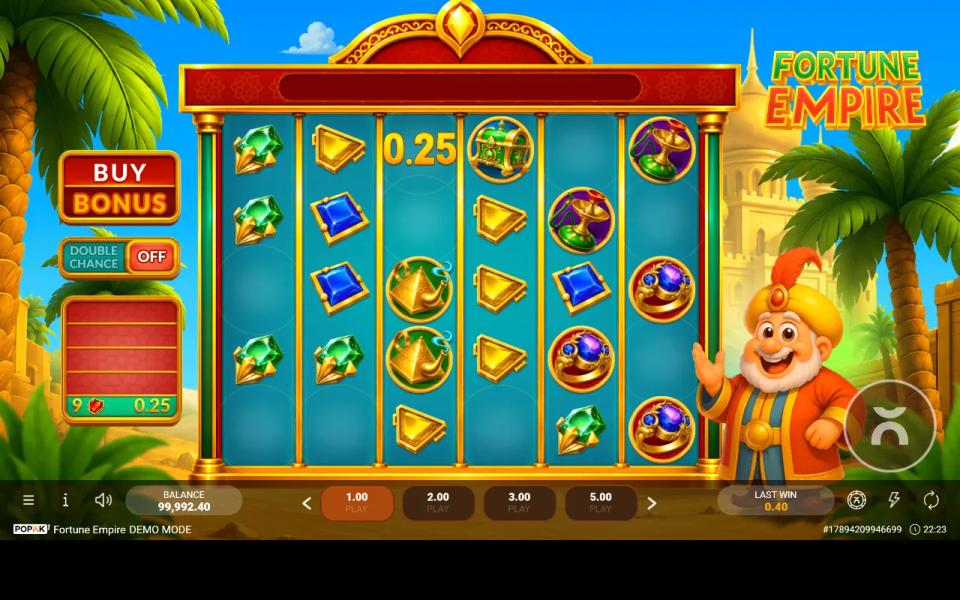
Eight matching symbols anywhere on the grid trigger a payout, dissolving to let new ones drop into the gaps. Because there isn't a wild symbol to bridge any near misses, a cluster either hits that eight-symbol threshold on its own or it doesn't. And when it does, the payouts are deliberately light. Landing eight green gems returns a fraction of the stake, and the paytable barely flinches as clusters grow, meaning ten symbols pay exactly what eleven do. You need twelve or more of the top treasure chest to secure a decent 50x payout.
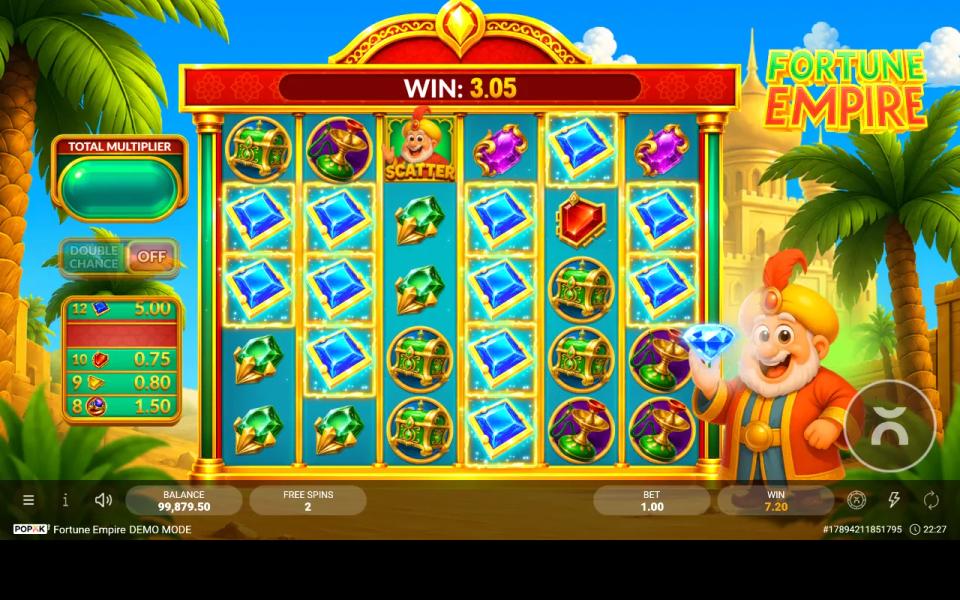
Multiplier orbs ranging from 2x up to 500x drop onto the board. In the base game, any orbs in view are added together when the tumbling stops and applied to that specific sequence, but their value vanishes before the next round. Four scatters activate fifteen free spins and hand back a small 3x payout on the way in. Six scatters pay 100x, making the trigger symbol the most valuable thing on the reels.
The persistent meter
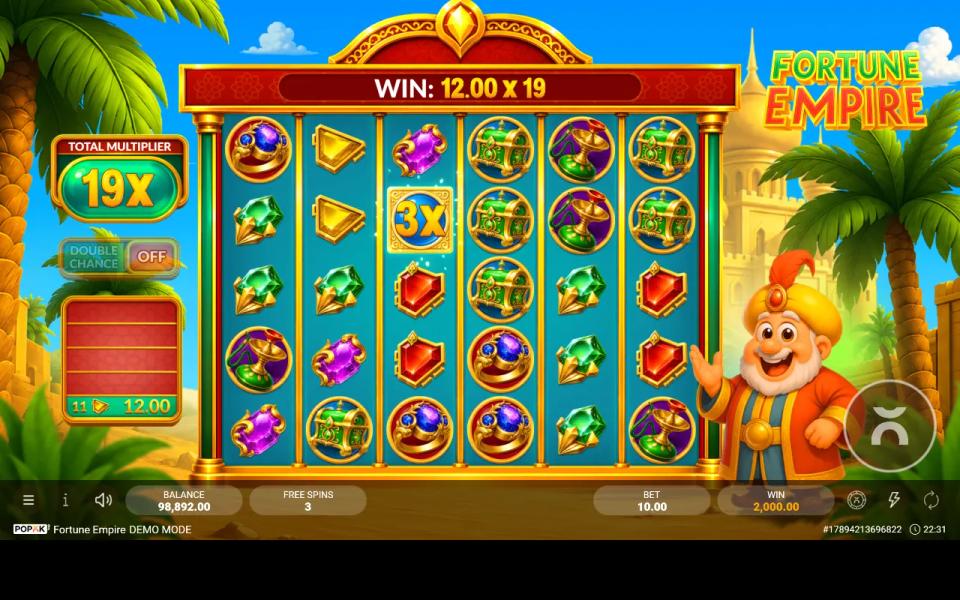
The free spins round introduces a persistent Total Multiplier. Whenever an orb lands alongside a winning sequence, its value gets added to this meter, which then multiplies every subsequent win for the rest of the feature. Once that multiplier climbs into the high teens, a perfectly ordinary board becomes real money. The game offers two ways to chase this. You can pay a 100x premium to buy the feature directly, though the interface quietly blocks this option for stakes over a certain threshold. Alternatively, the Double Chance option adds a quarter to your stake. The game refuses to explain what this extra cost actually buys, but it greys out the buy options once activated. The autoplay runs up to 1,000 rounds with a balance drop limit, but it offers no way to halt when the feature lands.
PopOK Gaming has already shipped these exact mechanics under a different name, while Bon Bon PRAG offers a larger grid and a much higher hit rate for anyone wanting more frequent action. What Fortune Empire does well is offer a surprisingly honest rules page, particularly by admitting that the Double Chance quarter provides the highest return of the three configurations, well clear of the 94.50% that Pragmatic Play's Kingdom of Atlantis returns on the same 6x5 scatter-pays board. The 5,000x max win is quite modest compared to the massive 25,000x cap on Gates of Olympus 2500, but with a 500x orb in the mix and an accumulating meter, it feels like a realistic target. The math here relies entirely on that one meter. A bought feature can easily reach its final spins with a blank multiplier, paying out base-game loose change and leaving you with a fraction of your entry cost. If the multiplier never climbs, you're just paying a premium to watch cheap gems dissolve.
Played and reviewed by the SlotsReach editorial team · Published 14 Sept 2026