Mythical Guardians Slot Review
by PG SoftReleased Dec 22, 2025
Specifications
| Game Type | Slots |
|---|---|
| RTP | 96.76% |
| Volatility | Medium |
| Max Win | 15,000x |
| Grid | 5x4 |
| Paylines | 1,024 ways |
| Min Bet | $0.6 |
| Max Bet | $180 |
| Hit Freq | 24.57% |
An anniversary built on familiar ground
PG Soft picked its two hundredth online slot to restate a trick its regulars already know. The studio hasn't rushed this anniversary, keeping to its usual release rate over the last twelve months, and it hasn't reached for anything radically new either. Instead, it built the milestone out of its two most common mechanics, cascading wins and symbol transformations. The result is a game that relies on framed symbols caught on the middle reels, turning wild and re-rolling the layout when they win. It's a familiar rhythm, stripped of multipliers and leaning entirely on how wide that re-roll can get.
What this game is trying to be is a chain-reaction engine. The premise is built around a glowing border that promises to rip across the grid, replacing stale symbols with a sudden wave of fresh ones. It wants you to look at a single hit and imagine it lighting up the entire screen. The four mythical characters are painted with real care, and the whole thing is dressed in a polished, rose-gold palette that makes the board look expensive. But beneath the spectacle of cells catching fire and dropping away, it's a game that just wants to give you another go at the same board without actually making the next drop any more valuable.
The baseline math
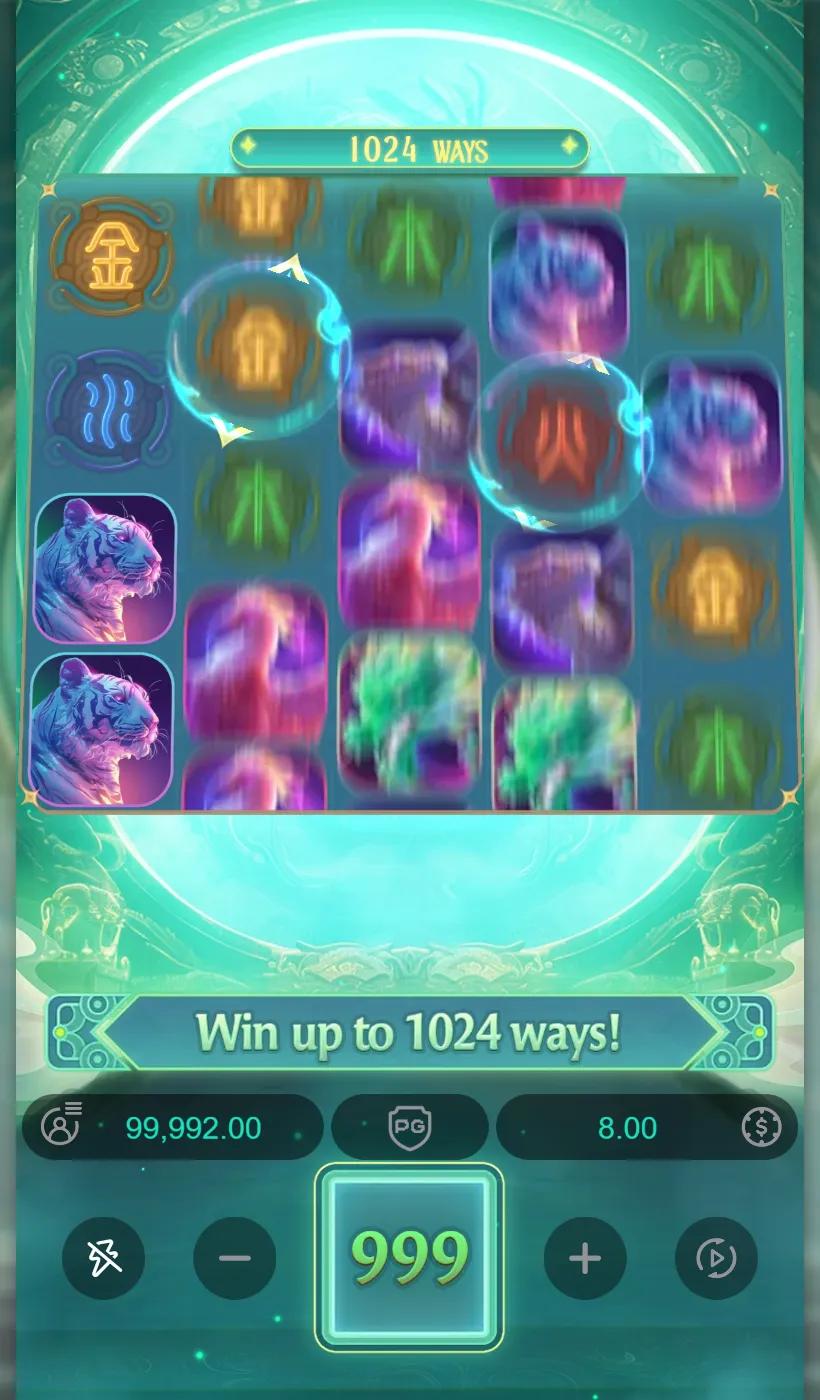
Mythical Guardians runs on a 5x4 layout with 1,024 ways to win, publishing a 96.76% return and a 15,000x maximum win. Volatility is medium, which is the studio's default setting, while the 24.57% hit rate sits on the stingy side of its catalogue. Stakes range from a surprisingly high 0.60 floor up to 180. Three treasure pots trigger ten free spins, with every extra pot adding two more, and the studio puts that trigger at 0.57% of spins.
The frame and the wait
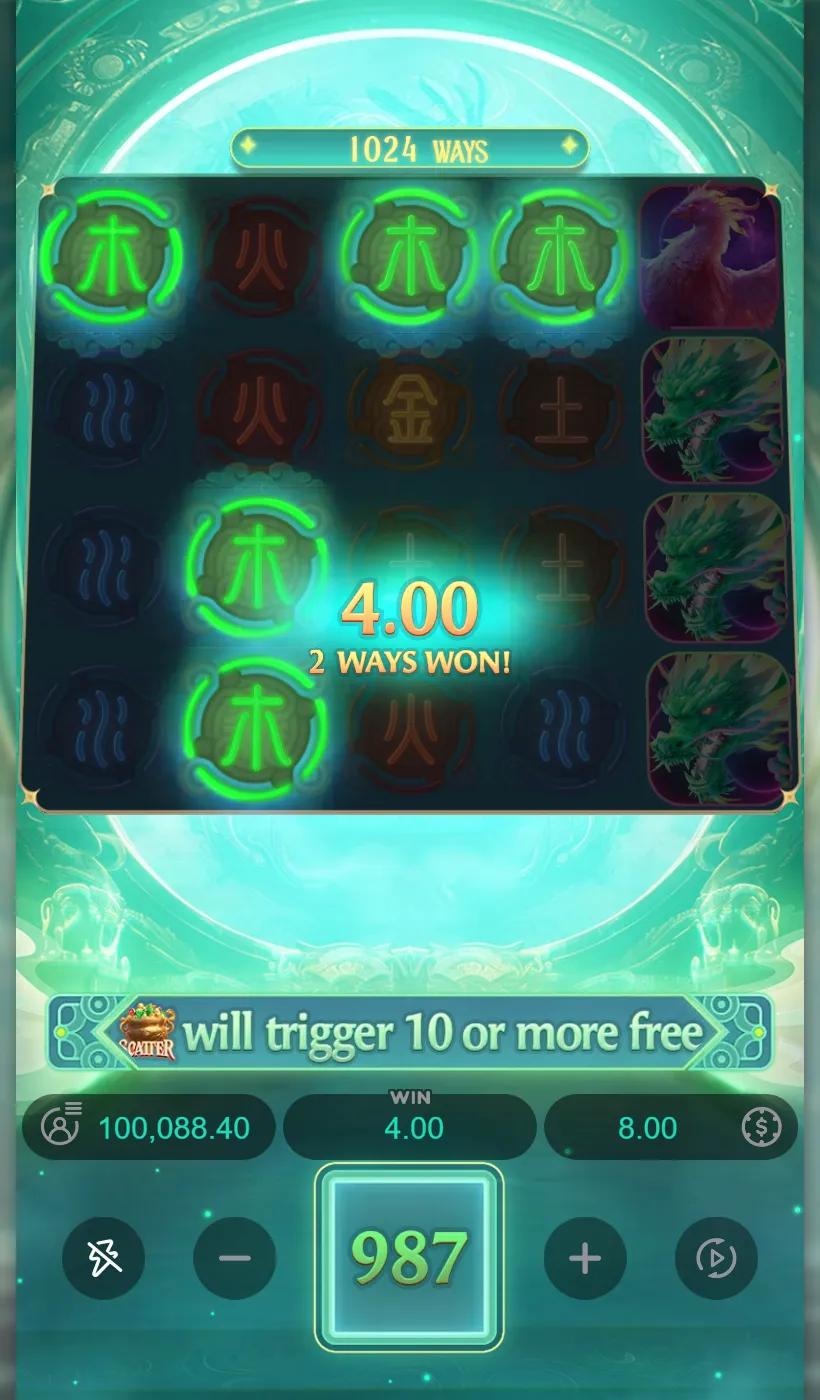
The base game leans entirely on those framed symbols, which only land on reels two, three, and four. A frame on its own does nothing, sitting there until it forms part of a winning combination. When it does, it turns wild and activates every position in either its row or its reel, never both. Those activated cells are replaced with random regular symbols before the next cascade drops in. Because the activated cells never come back as wilds or scatters, a fully lit row is just one wild surrounded by four fresh symbols.
Five random symbols on a nine-symbol paytable generally pay what five random symbols usually pay. The feature fires constantly, but the mechanical outcome is often just a short tumble of low-paying glyphs that hands back exactly the stake. It's loud, frequent, and cheap. And because a chain tends to stretch a small win rather than grow it, even a cascade running four steps deep can easily finish under the bet. The money in this slot lives in multiplying ways rather than valuable symbols. Five of the top Guardian on a single way pay a modest 5x, while five identical glyphs pay a fraction of that. A single-axis re-roll of random symbols is an unreliable way to build the kind of stacked ways you need. A base hit that actually matters is likely to come off a plain cascade of Guardians where the framed symbol had no part at all.
The cross upgrade
The only way into the bonus is catching those three pots, because the feature buy described in the game's own documentation is completely missing from the options. Frame activations skip pot positions and never produce them, meaning the board can fill with wilds and still leave you stranded on two scatters.
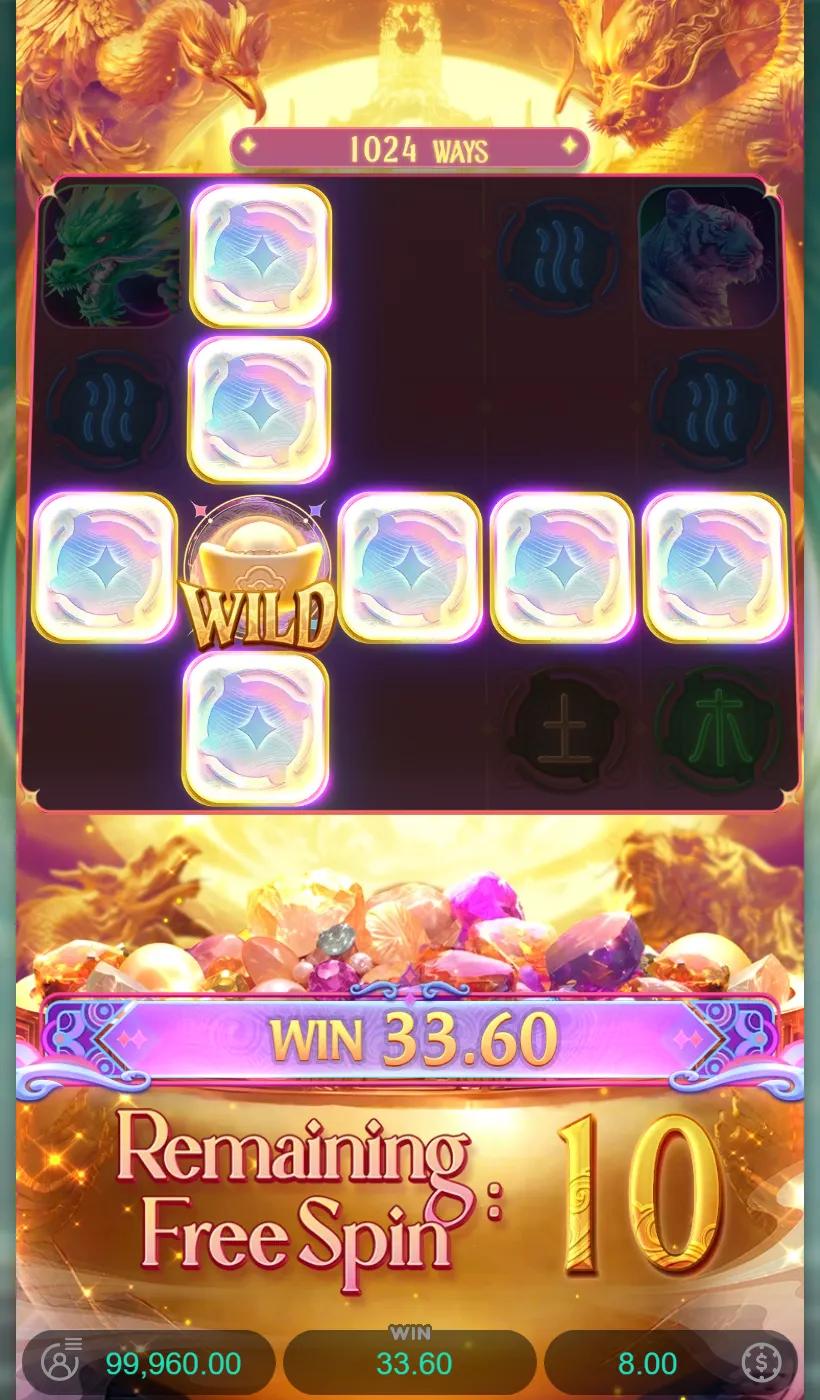
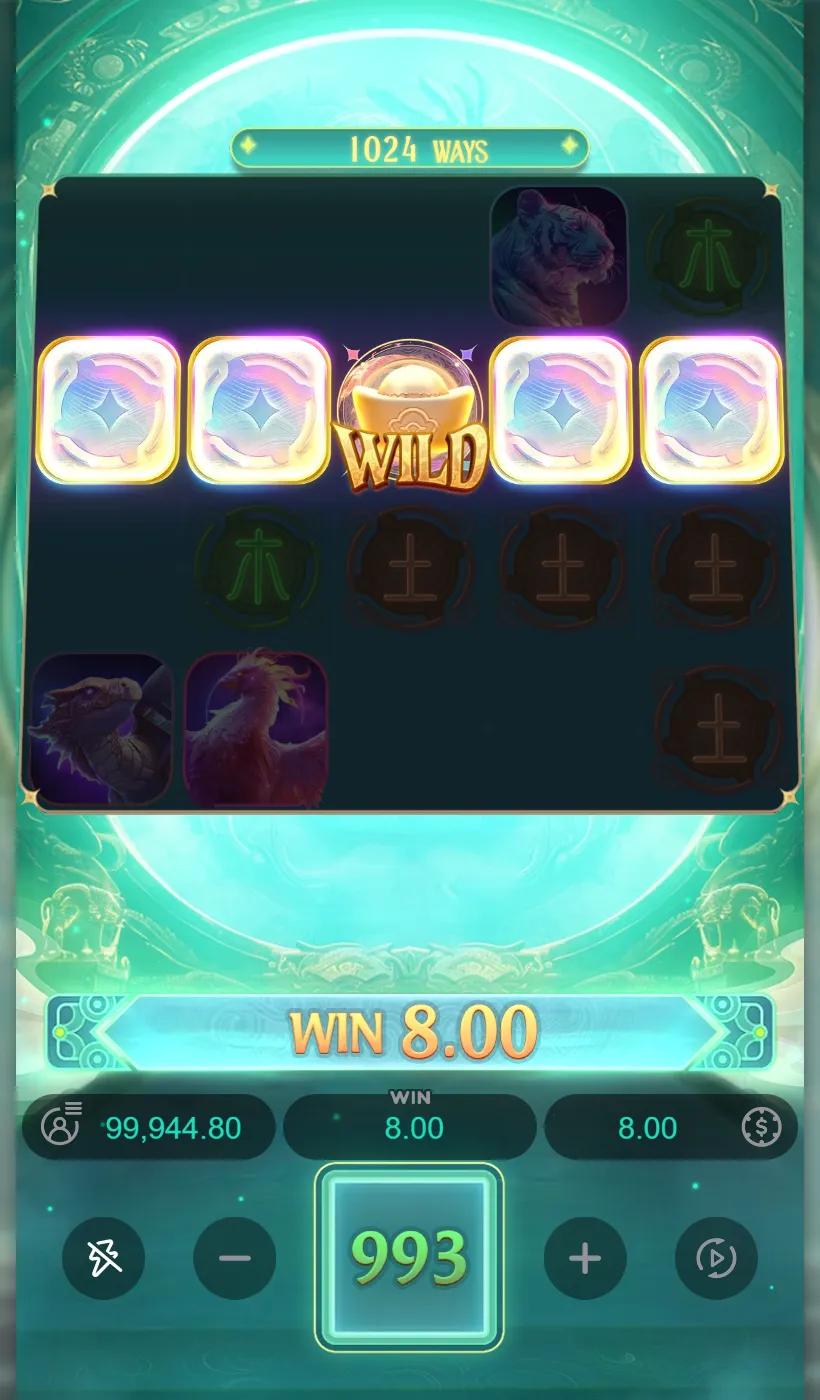
When you do hit that fractional trigger rate, the upgrade is entirely spatial. Framed symbols now expand both horizontally and vertically. A wild re-rolls its row and its column together, turning over up to eight cells from a single symbol. The activation is the spectacle, but the random re-roll decides the money. Two frames close together can turn over nearly the entire matrix.
That's the whole of the upgrade. The paytable stays identical, the wild still refuses to pay on its own, and there's no multiplier anywhere in the round. What the studio has done is double the size of the re-roll while leaving its value alone. Because a re-roll either lands perfectly or it doesn't, with no persistent meter holding value across the spins that miss, the round becomes heavily lopsided. The studio parks a massive 27.07 points of the game's return inside these free spins, but a dozen spins will likely consist of dead boards broken by one massive cross that comes back as matching glyphs on nine ways to carry the entire feature. A spin returning fifty times the bet is a roughly once-an-hour event on autoplay, arriving without a multiplier anywhere near it.

Set beside the studio's own shelf, the math model reads cautious. Mahjong Ways uses the same board and a slightly higher return to offer a 25,000x cap, while Lucky Neko took the same framed-symbol idea and advertised a 100,000x cap at the same medium volatility. We'd concede the surface is sharp, especially that rose-gold free spins palette, which is genuinely entertaining to look at. The 15,000x maximum win is inside the range this market treats as real, and the studio's billion-spin simulation proves it exists. But with no multiplier anywhere, the only road there requires ways stacked perfectly across a massive cascade chain inside free spins, built from re-rolls that are random by rule. Playing it feels like an endless series of misses waiting on the one cross that comes back paying. At a 0.60 floor, paying for the chance to see the two-axis version is a steep price for a missing multiplier.
Played and reviewed by the SlotsReach editorial team · Published 18 Sept 2026