Neptune's Citadel Slot Review
by GeniiReleased Aug 28, 2026
Deep underwater cascades meet an unforgiving math model where the multiplier meter resets after every single base round. Reaching the top payouts means grinding through small wins to trigger the elusive free falls, which is the only place those multipliers are allowed to stack.
Specifications
| Game Type | Slots |
|---|---|
| Volatility | Medium-High |
| Max Win | 2,000x |
| Grid | 6x6 |
| Paylines | Cluster Pays (5+ adjacent symbols, horizontal or vertical only) |
| Min Bet | $0.2 |
| Max Bet | $50 |
How the underwater grid actually works
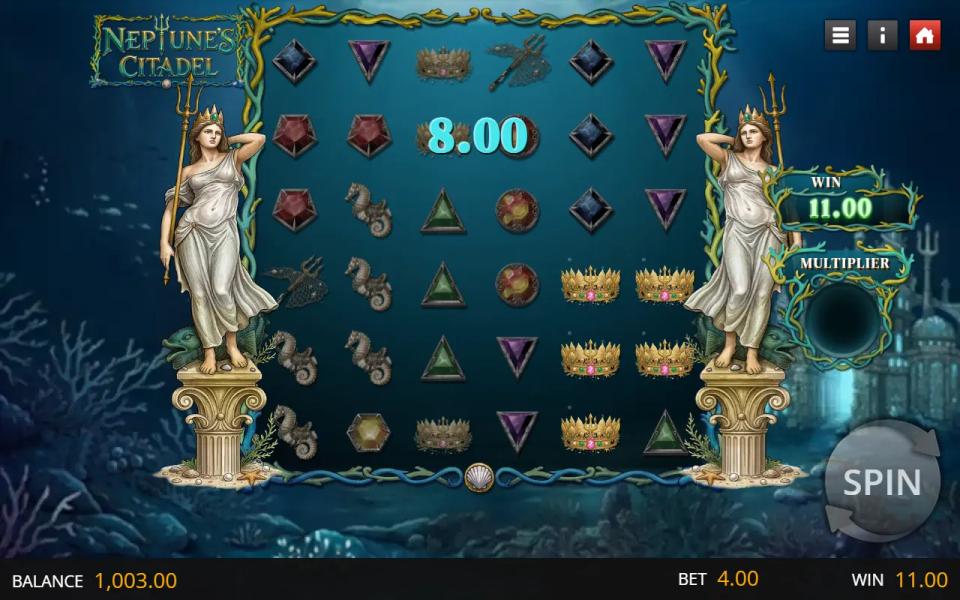
Genii built this cluster game around a drowned Greek city, and it looks fantastic. Five or more matching symbols touching each other pay out, the winners disappear, and new symbols drop into the gaps. A meter beside the reels multiplies everything when a scallop clam lands on a winning spin. In the base game, it empties at the end of every round, but in the eleven-spin bonus, it holds its value.
Chasing the multiplier cap
The advertised ceiling is 2000x your bet, but the paytable tells a different story. The best symbol is the gold crown, and a cluster of twelve or more is only worth 30x the bet, which is 600 coins. No cluster gets remotely close to the maximum on its own. The ceiling is actually a multiplier target rather than a symbol payout.
Clams can carry values up to 500x each, and those values add together instead of multiplying. Get enough clams across enough winning spins, and an ordinary crown cluster becomes a massive number. The catch is that the multiplier cannot be built up in the base game because the meter wipes as soon as a cascade stops.
That leaves exactly one route to the top prize. The bonus round is required, where the meter runs for eleven spins without being touched. If any spin hits the 2000x cap, the round just ends right there and pays out.
Cascades and the frustrating clam
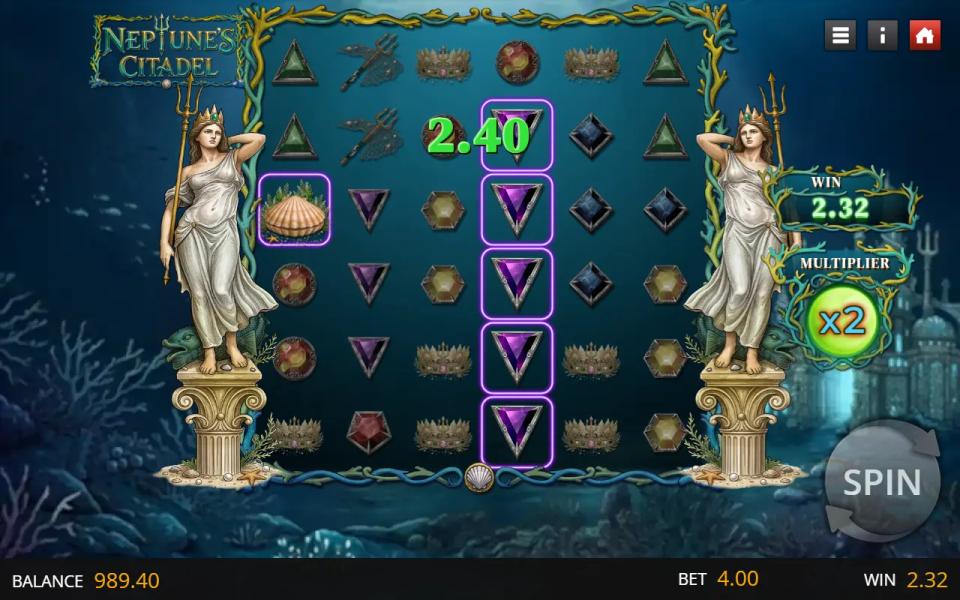
Wins form the strict way, needing at least five connected cells horizontally or vertically. Position does not matter at all, so a vertical run of five gems floating in the middle of the grid pays just fine. Separate clusters on the same drop pay separately and add up. Sizes band up to eleven in single steps, meaning a twenty-symbol crown blob pays the exact same rate as a twelve-symbol one.
Every paying board cascades to let new symbols drop, so a single spin can chain together multiple wins. Most cascades are just one drop long and add nothing extra to the payout. The clam is the really interesting piece, but it only adds its multiplier if the same spin also produces a cluster.
Land a clam on a dead board and it does absolutely nothing before being swept away. On a game where the entire ceiling depends on that meter, the most valuable symbol is void more often than not.
The free falls trigger blocks the board
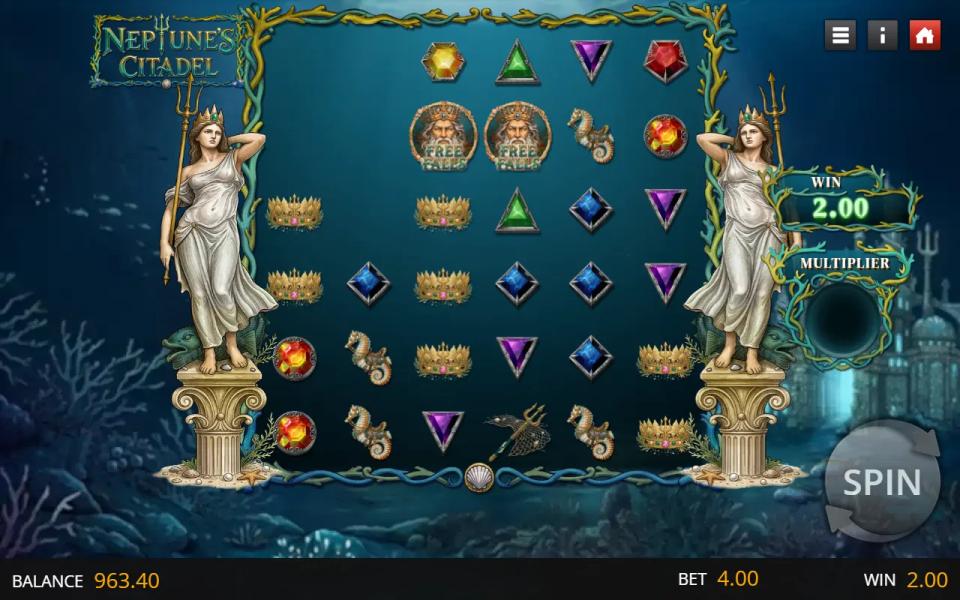
The bonus awards eleven free falls, which is just free spins renamed to match the tumbling reels. Getting there is the hard part because four Neptune medallions need to land on the middle four reels. Since scatters only appear in those middle columns, they drop precisely where clusters are most likely to form.
Below four, the scatter does not pay and does not accumulate towards a future trigger. It just punches a hole through the productive part of the grid. Most games let scatters sit there harmlessly while you wait, but this one actively gets in the way of forming clusters.
Once inside the bonus, the single difference from the base game is that the multiplier meter never resets. There is no bonus buy and no way to retrigger the round once it begins.
Beautiful art covering brutal math
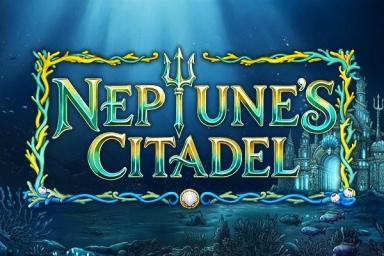
The art is genuinely much better than the math underneath it. The game loads straight to the grid with no intro screen, dropping into a cold, deep, hand-painted Atlantis. The drowned city is lit from inside so it glows turquoise, and two identical marble goddesses hold the reels open. Gold is the only warm color, making the crowns and the trident stand out sharply against the dark gems.
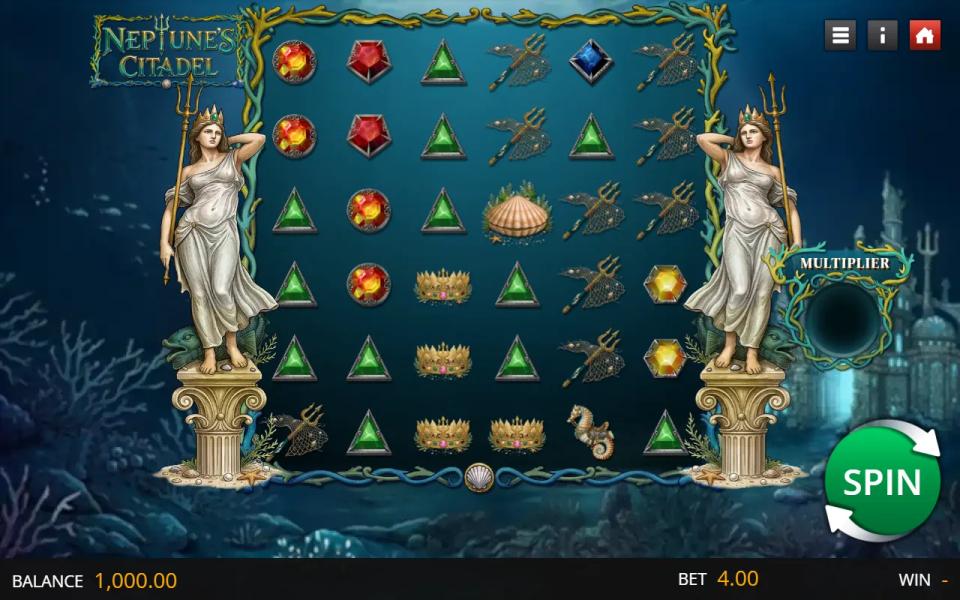
The math is far less forgiving. Wins are quoted in coins, and at the $4.00 default bet, a spin costs 20 coins. Exactly one symbol in the game, the crown, returns more than the bet for a minimum five-symbol cluster. The cheapest symbols pay just a quarter of the stake back.
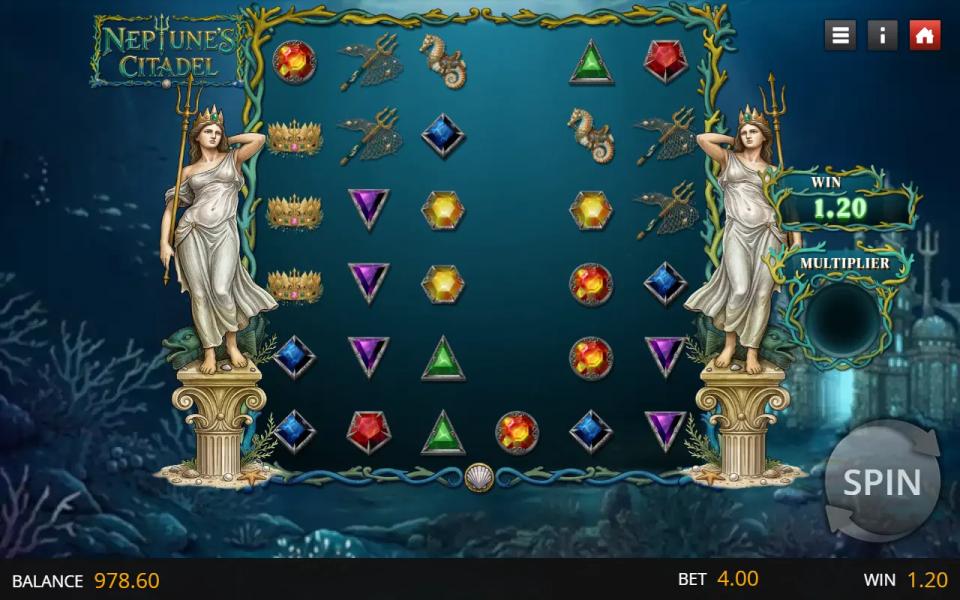
The board hands out a great many wins that are not really wins at all, lighting them up in violet while the balance slowly drains. The controls can also trip you up. The Bet Max button does not actually max the bet, as pressing it at the $4.00 default moves the bet to $5.00 because it raises the number of coins while leaving the coin size alone. Reaching the real $50.00 maximum needs a second control.
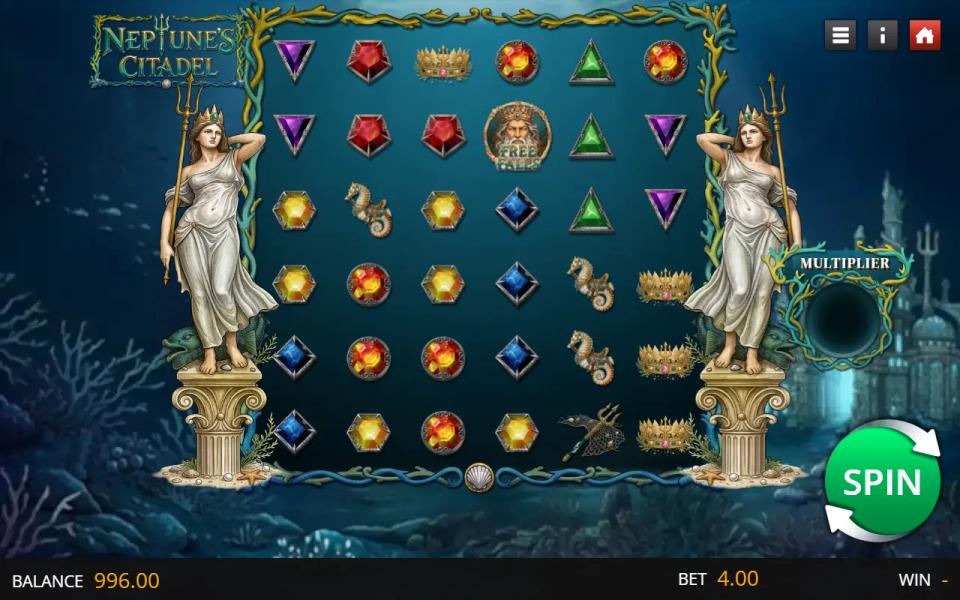
This is a competent cluster cascade wrapped in unusually good art, but the base game is a heavy grind. The meter that carries the whole design is confiscated at the end of every round, keeping the biggest payouts locked away. It really only suits players content to grind small clusters at $0.20 a spin while waiting on a rare four-scatter board, because those eleven free falls are the only place the multiplier is allowed to grow.
Played and reviewed by the SlotsReach editorial team · Published 28 Aug 2026