SlotsReach

Coba Reborn Slot Review

by ELK StudiosReleased Aug 1, 2023

Free demo - play instantly in your browser

Sequel adds 4 orchid powers to the walking snake formula. Blood Orchid spawns snakes, Ouroboros enables self-crossing. Same 25,000x ceiling, higher volatility.

Demo player curtain

Specifications

Game TypeSlots
RTP94%
VolatilityHigh
Max Win25,000x
Grid7x7
PaylinesCluster Pays (5+ connected symbols)
Min Bet$0.2
Max Bet$100
Hit Freq30%

Coba Series

Themes
Features

Coba Reborn Slot Overview

Giant snakes crawl across the grid and eat it. That is the hook, and it was the hook in the first Coba too: wins fill a meter, the meter releases serpents onto a 7x7 hexagonal board, and each one slithers a path, converting every symbol it passes into whatever its head is carrying. A snake is a walking cluster. It writes its own win as it moves.

What is new in Reborn are the orchids. Four of them, each a flower sitting in the grid as a blocker until a snake eats it, and each one bends the run in a different direction: more snakes, a second head, a resurrection, or permission to bite its own tail. A snake's path stops being one scripted line and starts having branches.

There are no free spins here, and no bonus round of any kind. The original had none either, so this is not a step backwards, but anyone arriving from other ELK titles should stop waiting for a trigger that never comes. Level 4 of the meter dumps six snakes onto the board at once, and that is the substitute.

Theme & Design

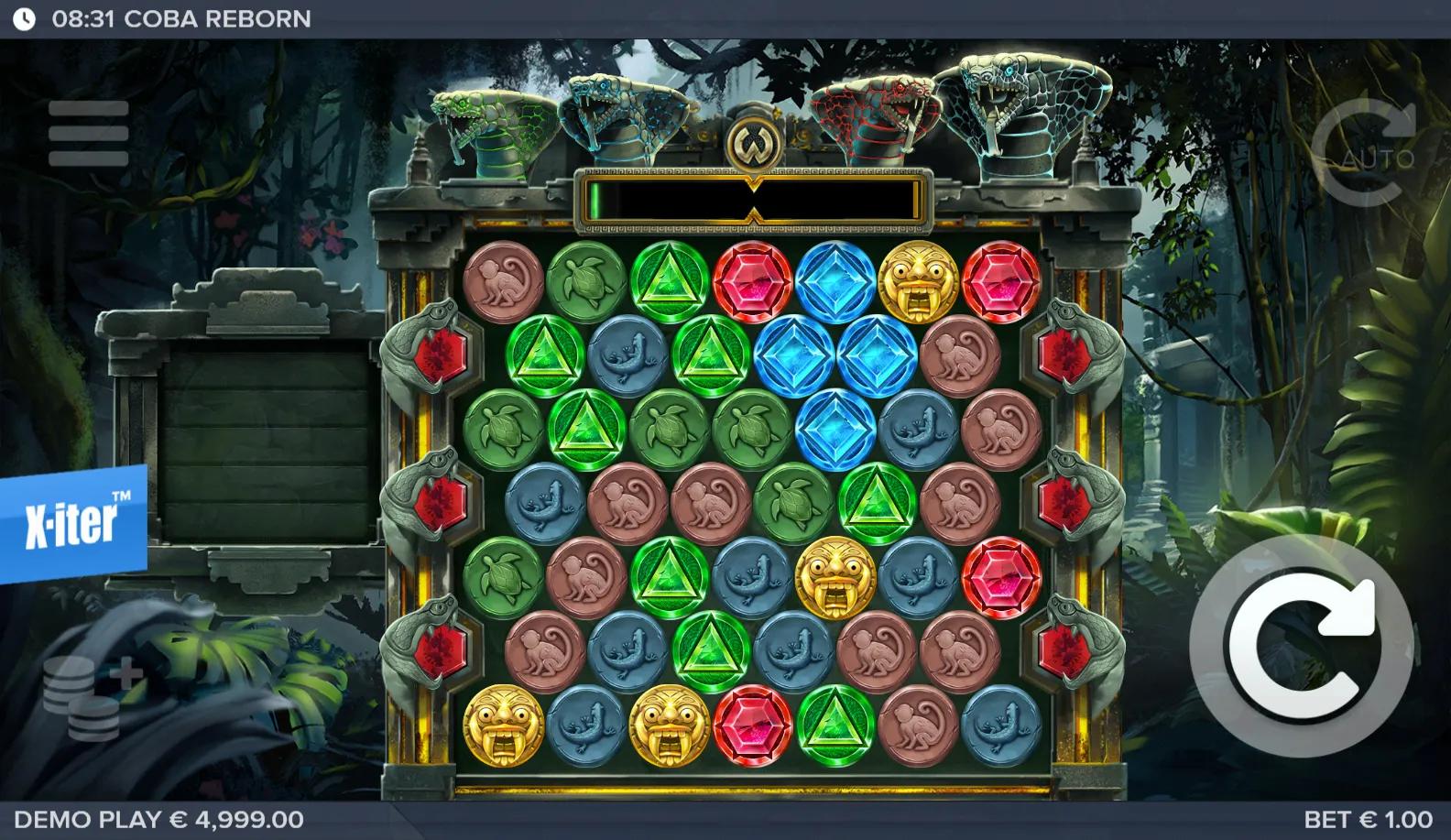
Night in the Borneo jungle, and the temple is barely lit. Ruins, hanging vines, a wash of mist behind the stone frame, the whole palette running dark green and slate. Symbols are round carved discs set into the honeycomb: a gold jaguar mask, three cut gems (a red hexagon, a blue diamond, a green triangle) and three animals in relief, monkey, turtle and gecko. Four cobras perch along the top of the lintel, one for each meter level, and each is its own colour: mossy green, teal, blood red, ice blue. A gold medallion marks the midpoint of the meter bar, so the halfway mark is always visible coming. Cluster wins tally up on a stone tablet propped to the left of the temple.

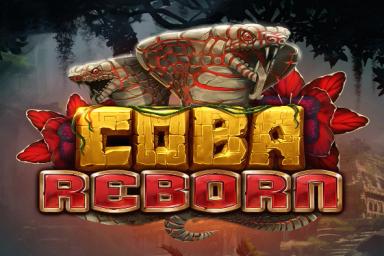
The two-headed golden serpent in the game's key art is Hydra Orchid before you have even met it. Less good: the low symbols are all muted stone inside a dark frame, and at speed the grey gecko and the green turtle blur together. A cluster resolves and it takes a beat to work out which one paid.

Symbols & Paytable

SymbolPayout
Wildpays at the top rate, 100 coins for 5 rising to 5,000 for 15+Substitutes everything except orchids. An all-wild cluster pays as the highest symbol.
Golden mask (top symbol)100 / 200 / 300 / 400 / 500 coins for 5 / 6 / 7 / 8 / 9, up to 5,000 at 15+A spin costs 100 coins, so even the largest mask cluster is 50x the bet.
Ruby, sapphire and emerald gems40, 30 and 20 coins for 5; 1,000, 750 and 500 at 15+The three high tiers below the mask.
Monkey and gecko15 and 10 coins for 5; 250 and 200 at 15+
Turtle (lowest)5 coins for 5, 60 for 12, 150 at 15+Twelve turtles connected across the board returns 0.6x the stake.
Multiplier wildno fixed value, multiplies the cluster it sits inCreated at snake crossings. Starts at x2 and doubles each time the same cell is crossed again.
Orchids (Blood, Hydra, Rebirth, Ouroboros)no payoutBlockers. Wilds cannot substitute for them; their worth is entirely in what a snake gets for eating one.

Features & How They Work

Cluster Wins and Avalanches

Five or more matching symbols touching each other anywhere on the 49-cell honeycomb pay as a cluster, and two unconnected groups of the same symbol pay separately. Winners explode, and the drop that follows is odder than most: leftovers fall vertically, then slide left and right, settling as far down as the shape of the grid allows. Refills come in from the top and the avalanche runs on for as long as new wins keep appearing. Every exploded symbol feeds the meter.

The Snake Meter

Four levels, tracking every symbol that has blown up so far. Half full pays on its own: a random scatter of wilds lands on the board after the refill, which the first game did not do. Fill the bar completely and the current level releases snakes from random entry points along the edges, one at a time. Levels 1, 2 and 3 each award three snakes; level 4 awards six. The original was stingier early on, handing over a single snake at level 1 and two at level 2, so Reborn front-loads the ladder even while its RTP and hit rate come in lower.

How a Snake Behaves

A snake is a linear cluster with a head and a body, never shorter than five symbols, so it always forms part of a win. The first symbol it crosses becomes its selected type, shown on the head, and everything it passes over after that transforms into that type, wilds and multiplier wilds excepted. Then the survival rule. To eat, it has to move over its own selected symbol, a wild or an orchid. Eating grows it by one, buys it an extra move and turns its body yellow, meaning it lives through the next drop; a blue body means it has not eaten yet. Fail to eat across the whole movement and it dies and is removed before wins are evaluated, so the cluster it spent the drop assembling never pays. If the first symbol it crosses is an orchid, its selected symbol becomes wild, and it then paints wilds everywhere it goes, though from that point it can only feed on wilds and orchids.

The Four Orchids

Blood Orchid is the loudest. A snake that eats one spawns a random number of fresh snakes from the edges of the grid, and it does not need a snake at all when two Blood Orchids are on the board together: each spawns a snake from its own position, and the cell it vacates turns wild once that snake finishes moving. It can also drain any other orchid in view to spawn from its own square. Hydra Orchid grows a second head, spawning a new snake behind the head of the one that ate it, carrying the same selected symbol and inheriting any rebirth or ouroboros power the parent was holding. Rebirth Orchid is insurance: a dead snake comes back at the same length with its ouroboros power intact, and the snake carries the charge across drops until it is spent. Ouroboros Orchid is permission to cross its own body for one movement turn without dying, which grows it, secures its survival, and leaves a multiplier wild at the crossing point. A snake holds one rebirth and one ouroboros at the same time, but cannot eat a second copy of either.

Crossings and Multiplying Multipliers

When one snake moves over another snake's body, that cell becomes an x2 multiplier wild. Cross the same cell again and it doubles to x4, then x8, and up from there. Several multiplier wilds inside one winning cluster multiply against each other instead of adding, which is the only realistic road to the 25,000x cap, and it takes several snakes tangled on the board at once to happen at all. The round ends the instant the cap is hit.

X-iter Buys

Five prices. 2x bet for Boosted Chance (better than double the odds of reaching level 1 on that drop), 10x for Flower Power (one drop with at least three random orchids), 25x for All Ouroboros (a guaranteed double Blood Orchid activation, and every snake may cross itself), 100x for Bali Boost (start on level 1 with three snakes) and 500x for Coba, which starts the round on level 4 with all six. RTP holds at 94% whichever one is pressed, and none of them work from inside an active round. With bets running 0.20 to 100, that top buy costs 50,000 at max stake.

Screenshots

ELK Studios's Coba Reborn slot - Adventure theme, high volatility action

How Coba Reborn Plays

A 30% hit rate on a board this size means roughly two spins in three hand back nothing, and most of the ones that do pay in small change. The base game is a waiting room. What gets watched is not the win counter but the bar creeping toward that gold medallion, because the halfway wild scatter is the only thing that reliably interrupts a cold run.

Once snakes are on the board the game changes register completely. They move one at a time, animated, and a level-4 release of six takes a while to resolve. The tension sits in body colour. Yellow means it comes back next drop. Blue means it is one failed move from deletion, along with whatever cluster it was assembling. Watching a long blue snake hunt for anything edible is the best thing here, and it is a different kind of anxiety from counting scatters.

Crossings need traffic, though. One snake alone can never cross another, so levels 1 and 2 tend to produce tidy little wins and not much more, while everything memorable happens with three or six of them knotted together and orchids feeding them. The gap between the ordinary drops and the good ones is wide, and that is where the high volatility label comes from. It probably wants a long session at a small stake rather than a quick look at max bet.

Pros & Cons

Pros

  • Walking snakes that rewrite the grid as they cross it, unlike anything else in cluster slots
  • Four orchids give each snake run branching outcomes instead of one fixed script
  • Half-full meter pays a wild scatter, so the ladder is not all-or-nothing
  • Five X-iter prices, from a 2x nudge up to the 500x level-4 buy

Cons

  • 94% RTP and a 30% hit rate, both worse than the original Coba
  • Base cluster pays are small (twelve connected low symbols return 0.6x), so drops without crossings barely register
  • Dark palette blurs the low symbols together at speed
  • No free spins or bonus round, so a cold run has nothing to break it up

Coba Series

GameRTPVolatilityMax Win
Coba95%medium25,000x

Is Coba Reborn Worth Playing?

7/10

ELK built a harder version of a game that was already niche, and the snake mechanic is still the reason to load it. The orchids do more than decorate. A run that starts as one snake crawling toward its own death can end up as four snakes crossing each other over a wild-painted grid, and that unpredictability is what the first game ran out of once its ladder became familiar.

The price is paid in the base game. A point of RTP gone, nearly a quarter of the hit rate gone, and cluster pays trimmed at the larger sizes. Long stretches where the meter is the only thing moving. Whether that trade lands depends on how much value sits in the chaos of a level-4 drop against the original's steadier drip. The original is the friendlier game; this one is the more interesting.

Frequently Asked Questions

Does Coba Reborn have free spins?

No. There are no free spins and no separate bonus round at all. Filling the meter to level 4 releases six snakes in one drop, and that is the game's stand-in for a bonus.

What is the maximum win in Coba Reborn?

25,000x the bet, or 2,500,000 coins. The round stops the moment the cap is reached and pays out what has been collected. Getting near it needs several multiplier wilds inside a single cluster, since those multiply each other.

What do the four orchids do?

Blood Orchid spawns extra snakes from the grid edges, Hydra Orchid grows a new snake behind the eater's head, Rebirth Orchid revives a snake after it dies, and Ouroboros Orchid lets a snake cross itself to create a multiplier wild. They sit in the grid as blockers until a snake eats one.

Can you buy the bonus in Coba Reborn?

X-iter has five modes priced at 2x, 10x, 25x, 100x and 500x the bet. The 500x Coba mode starts the round on level 4 with six snakes. RTP stays at 94% for every mode, and they can only be activated from the base game.

Is Coba Reborn suitable for under-18s?

No. It is a real-money gambling product restricted to players of legal age, 18 or over in most markets. The demo runs on play money only and its results are no guide to a cash session, so set a budget before switching over.
Arina

Reviewed by Arina, PR & Content Manager

PR & Content Manager at SlotsReach

Published 31 Jul 2026 · Updated 31 Jul 2026