Eternal Desire: The Curse of Love Slot by Zeusplay
by ZeusplayReleased Jan 1, 2026
Free demo - play instantly in your browser
Gothic romance slot with a meaningful choice: pick Vlad or Mina for two different free spins modes. 97.40% RTP, 15 paylines, medium-low volatility. Want to try Eternal Desire: The Curse of Love for free? Click "Free Play" below to load the demo in your browser.
Specifications
| Game Type | Slots |
|---|---|
| RTP | 97.4% |
| Volatility | Medium-Low |
| Grid | 5x3 |
| Paylines | 15 |
| Min Bet | $0.1 |
| Max Bet | $20 |
About Eternal Desire: The Curse of Love Slot
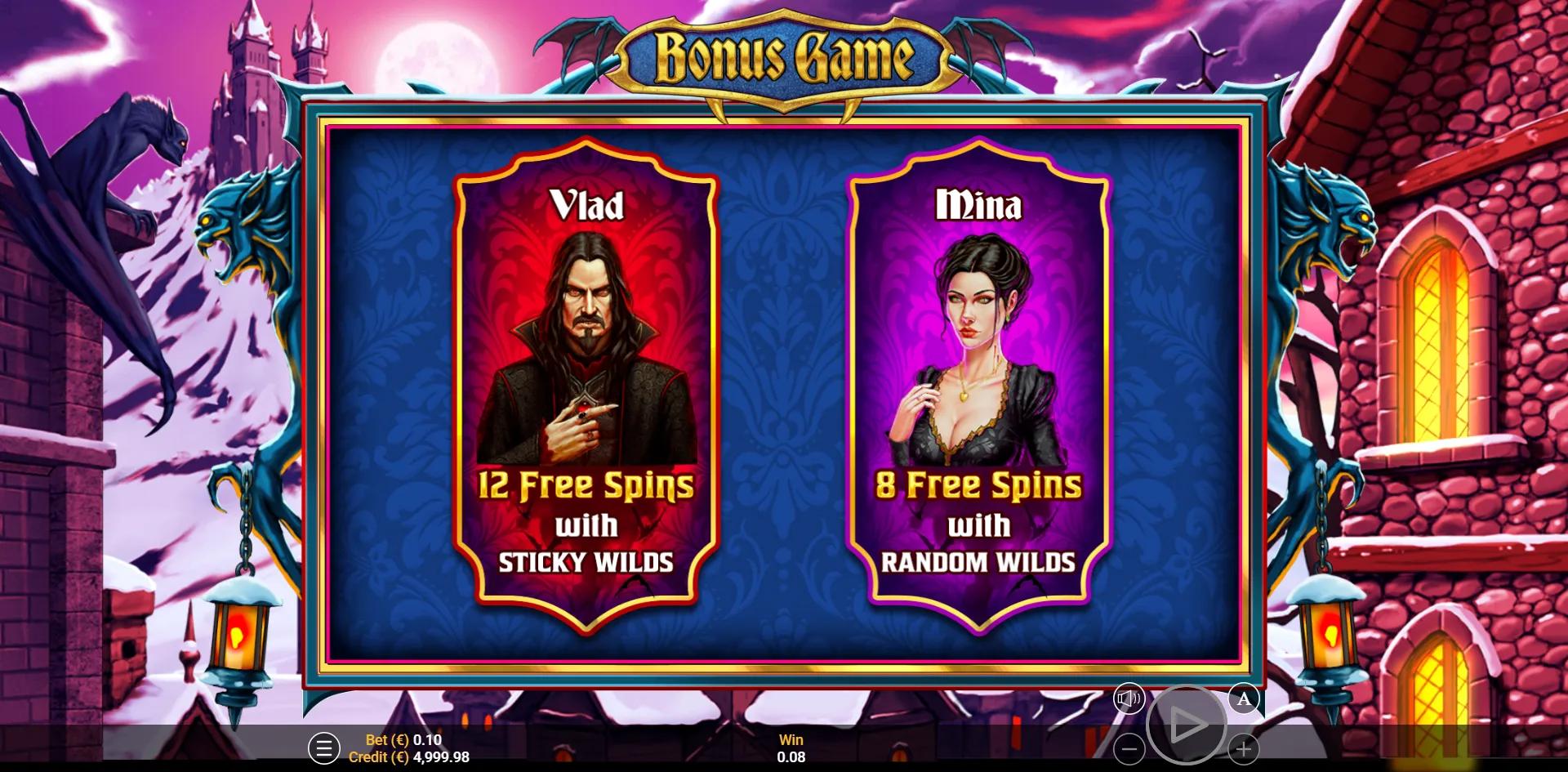
Pick Vlad or pick Mina. That choice - made after three Wilds land simultaneously on reels 1, 3, and 5 - splits the bonus into two modes that play nothing alike.
Vlad gives 12 spins with sticky Wilds that accumulate. His Wilds appear on all five reels instead of just the three available in base play, and every Wild that lands stays locked in place for the rest of the feature. A Wild on spin 4 sticks through spin 12. Two more on spin 6 stay through the end. By the final few spins, if Wilds showed up consistently in the first half, you get multi-reel Wild coverage across most of the 15 paylines. The floor on a Vlad run is decent because even sparse Wilds still contribute something permanent.
Mina gets 8 spins instead, but each spin randomly places between 1 and 15 Wilds across the grid. Fifteen positions total on a 5x3 layout, so 15 Wilds means a full Wild board - every position covered, every payline paying at the Wild rate simultaneously. That outcome is rare. But 8 or 10 random Wilds on a single spin already produce denser coverage than Vlad typically builds over multiple rounds of accumulation. The flip side: Mina's worst spins drop 1 or 2 Wilds and hit nothing, while Vlad's worst spins still add something to the board. Neither path carries better expected value. Just different shapes of risk.
Outside the main feature, a Coffin Select Bonus fires randomly during base play with no trigger condition at all. You pick coffins one by one for prize values up to 75x your bet until the Renfield coffin ends the round - a self-contained pick game that adds variance between bonus triggers. Vampire romance dressing over a 15-line grid where the only base game symbols that matter are those three Wilds, because landing all three is what opens the door to either path. Nine regular symbol tiers with no two-of-a-kind pays, so you need alignment on at least three reels before anything registers.
Reviewed by Arina, Slots Editor at Spinoxy Media Ltd.