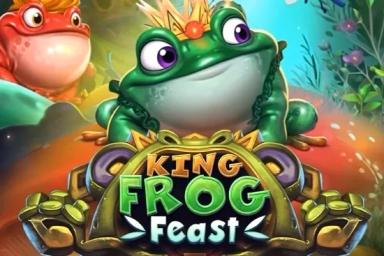
King Frog Feast Slot Review
by HabaneroReleased Sep 8, 2026

Specifications
| Game Type | Slots |
|---|---|
| RTP | 96.82% |
| Volatility | High |
| Max Win | 1,414x |
| Grid | 6x5 |
| Paylines | Anywhere pays: 8 or more of a frog, 7 or more of a tadpole |
| Min Bet | $0.28 |
| Max Bet | $1400 |
Scaling down the summer caps
Habanero hasn't been shy with its payout caps lately. Battleship Strike tops out at 13,272x, Happy Hatchlings at 5,446x, and Battle The Beast cleared 4,047x just four weeks earlier. And the 6x5 anywhere-pays layout is a shape players generally know from elsewhere with rather bigger numbers attached to it, like the 15,000x on Bonanza Billion Merge Up from BGaming or the 5,000x on Pragmatic Play's Moon Rush. But King Frog Feast breaks from that summer trend. Of the 203 Habanero games we list, it's the only one on this grid, and one of just five with a roaming wild. It feels built specifically for this board rather than lifted from an older engine.
The premise is fairly simple. A crowned amphibian sits in a swamp, swallowing insects to build a multiplier. It's a somewhat slow, readable progression about a predator wandering a pond and getting steadily fatter.
The math model runs on a 6x5 anywhere-pays grid requiring eight matching frogs or seven tadpoles for a minimum win. Stakes run from 0.28 to 1,400 a spin. The base return is 96.82%, the buy feature costs 53.57x the bet at a 96.81% RTP, and a Super Bet option doubles the stake while dropping the return to 96.77%. The maximum win caps at 1,414x.
A predator on the grid
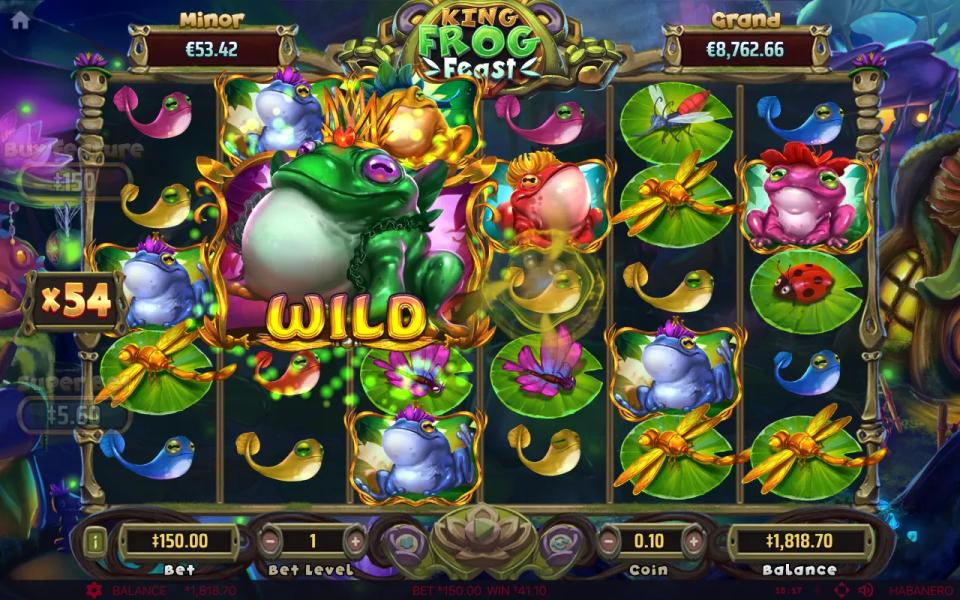
The base game relies on a persistent stream of insect multiplier symbols dropping onto the matrix. Gold dragonflies, ladybirds, purple dragonflies, and mosquitoes carry values from x1 to x8, but they pay nothing on their own. For them to do anything, a wild frog has to land next to them and eat them, absorbing their value into a multiplier. Because the bugs land constantly, a spin can easily drop eight of them onto the board with no frog anywhere near, rendering a quarter of the layout dead weight before the reels even stop. When a frog does eat, the empty space refills, potentially feeding him again up to five times. But the multiplier resets before the next round.
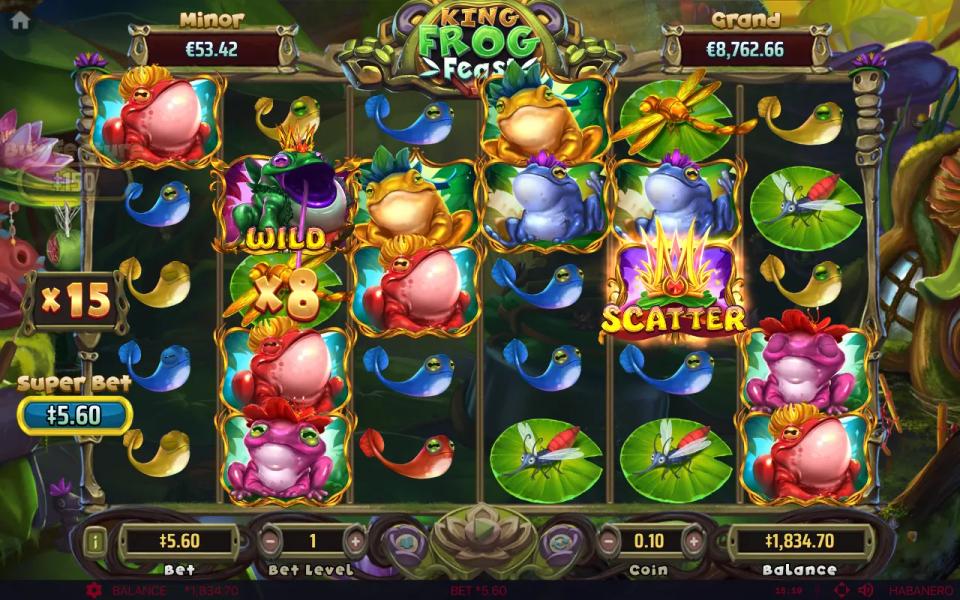
The math problem here is what that meter actually amplifies. The paytable is incredibly light. Minimum clusters of tadpoles return a few hundredths of the bet, and nine to twelve adult frogs pay between 0.43x and 1.43x the bet.
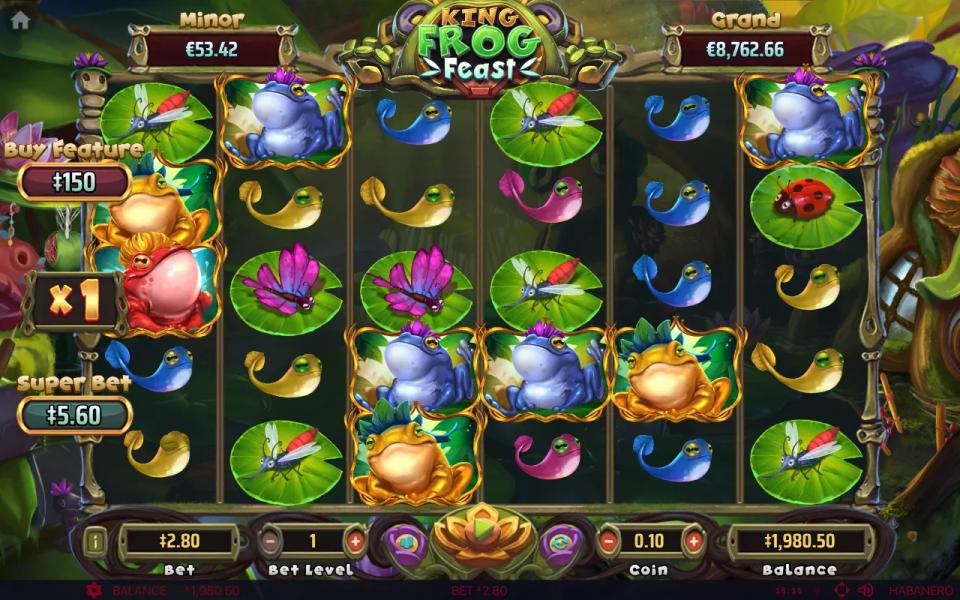
Landing three to six scatters triggers between 8 and 25 free spins, with the top count throwing in a 5x payout at the door. Missing the third scatter drops a red cushion and a lily-pad shade over the next reel to tease the near miss, a trick that works exactly once before fading into the background. During the free spins, the frog stays on the board and walks one cell per spin, eating any bug he touches, including on the diagonal. The multiplier never resets. If he manages to eat four bugs in a single spin, he swells to a 2x2 symbol, and every tadpole on the board has a chance to upgrade into a matching adult frog.
Paying double for the same paytable
There's a buy option priced at roughly 54x the bet, guaranteeing at least three scatters and eight free spins. Alternatively, the Super Bet doubles the cost of every spin to award 12 to 40 free spins on a trigger, a frog that moves two spaces per spin, and a slightly higher chance for tadpoles to upgrade. Because wins are calculated on the base stake rather than the doubled cost, a feature has to work twice as hard just to cover its own price.
Two progressive jackpots, a Minor and a Grand, sit above the reels and activate randomly at the end of a round. They read the same whatever the stake, so a small bet looks like the cheap way to chase them, though the rules never say whether the trigger odds rise with the bet.
King Frog Feast is an odd release when stood next to heavy hitters on the same layout. It lacks the sheer financial gravity of those slots, operating instead on a much flatter, quieter math model. What it does exceptionally well is legibility. The roaming wild mechanic is genuinely entertaining to follow, letting you watch the frog stalk the board and build a multiplier in a way that makes absolute visual sense.
But a massive multiplier means very little when it applies to a paytable this thin. A feature can do everything it's designed to do, pushing the frog to its 2x2 state and driving the meter to a number most games would celebrate, and still limp back at less than half the price of the buy. The bottleneck is the tadpoles. Because they only have a chance to upgrade on the rare spin the wild grows, you're usually multiplying payouts worth a fraction of the stake.
That dynamic explains the 1,414x maximum win. It isn't a mirage: the route to it is a long free spins round where the meter keeps climbing and the frog keeps upgrading tadpoles. It's just a very small top prize for the genre, much like Lake's Five from ELK Studios, which also runs a wandering wild into a modest 2,160x, even if Wicked Games proved a similar mechanic can stretch to 10,000x in Don't Die. The high base return, sitting above 170 of the 196 Habanero titles we hold a figure for, is a real point in its favor. But building a towering multiplier just to apply it to pocket change turns a great mechanic into a frustrating math problem.

Played and reviewed by the SlotsReach editorial team · Published 16 Sept 2026