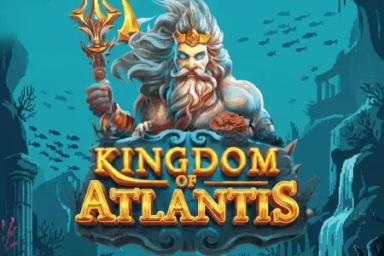
Kingdom of Atlantis Slot Review
by Pragmatic PlayReleased Sep 12, 2026
Specifications
| Game Type | Slots |
|---|---|
| RTP | 94.5% |
| Volatility | Medium |
| Max Win | 5,000x |
| Grid | 6x5 |
| Paylines | No paylines - any 8 or more matching symbols anywhere on the 6x5 screen pay |
| Min Bet | $0.2 |
| Max Bet | $240 |
Pragmatic Play has a very specific habit of taking an established, highly capable math model, bolting a progressive jackpot system to the roof, and passing the construction costs directly to the player. Kingdom of Atlantis is the studio's familiar Gates of Olympus pay-anywhere arithmetic, shoved underwater and taxed heavily for the privilege. Just eleven days before this released, the same studio put out Moon Rush, running the exact same board at a standard 96.50% return. Lotus Treasure - Oranje Jackpot arrived two days earlier at 94.51%, showing a clear pattern for the studio's jackpot editions. Here, the machine runs two full points lower just to feed the progressive pots sitting above the grid.
Sitting in front of it is an exercise in ignoring the scenery. The physical reality of the game is a long, dry wait for a cluster to align with a multiplier gem. You are watching a grid that doesn't hide how little it cares about the base game, dropping symbols that clear and fall again, usually amounting to nothing at all while the four locked jackpot tiers stare down at you.
The mechanical baseline is uncompromising. The return is a flat 94.50% across every mode, paired with medium volatility. A win requires eight matching symbols anywhere on the six-by-five grid. The ceiling is 5,000x the stake, hitting once in 697,350 spins. Entry to the free spins costs a 100x buy, while an ante bet costs 1.25x the stake to double the natural trigger chance.
The flat bands
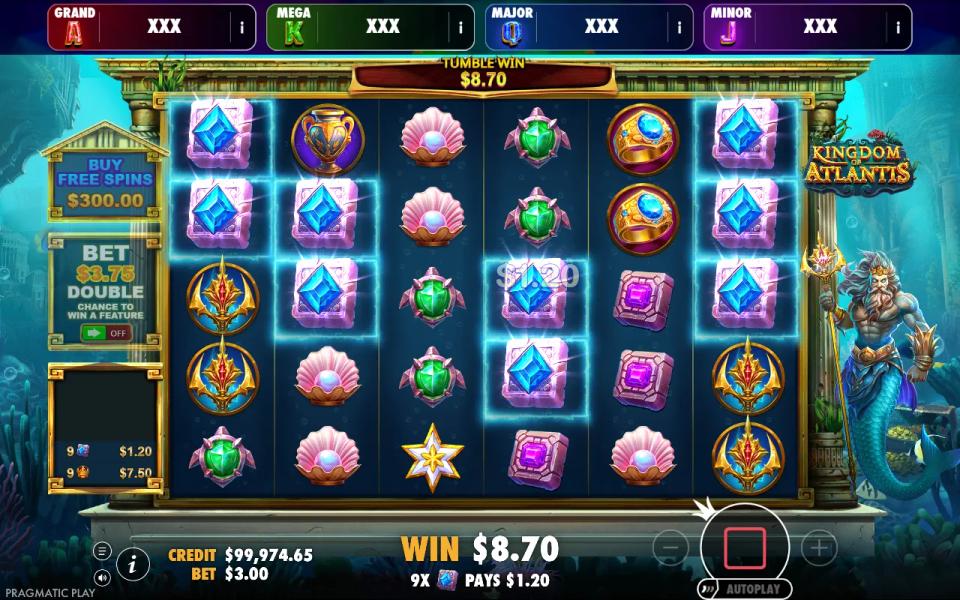
The board pays for eight or more of any symbol anywhere in view, with no need for lines or touching. Winning symbols vanish, letting new ones drop to potentially pay again until a tumble comes up empty. The symbol values themselves aren't carrying the money. The top-paying trident awards 50x for twelve or more, while the bottom green anchor hands back a quarter of your stake for eight. The bands are entirely flat above twelve, so a board packed with thirty matching symbols pays exactly the same as a cluster of twelve, capping the value of a massive drop. Most base spins end on the first tumble without a single match, and a run of over a dozen dead boards is standard behavior. When a handful of tumbles do connect, you can easily scrape back less than 4x the stake.
The real economy sits in the seahorse gems, which drop with values from 2x up to 500x. They don't multiply single wins. When a tumble sequence finally stops, the game adds every gem in view together and applies that combined figure to whatever the sequence paid. A massive gem on a dead board is just set dressing, entirely worthless without a win to attach to.
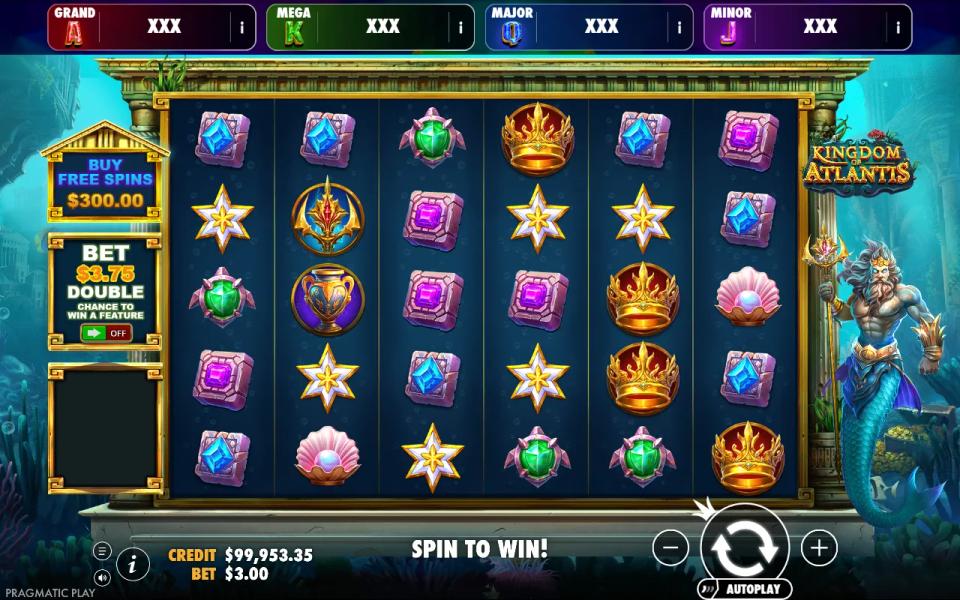
Four Poseidon scatters trigger fifteen free spins. Landing three does absolutely nothing, and the game doesn't bother slowing down the reels to build tension for a fourth. If you manage to drop six, they pay 100x on their own, matching the price of the buy.
The late arrival
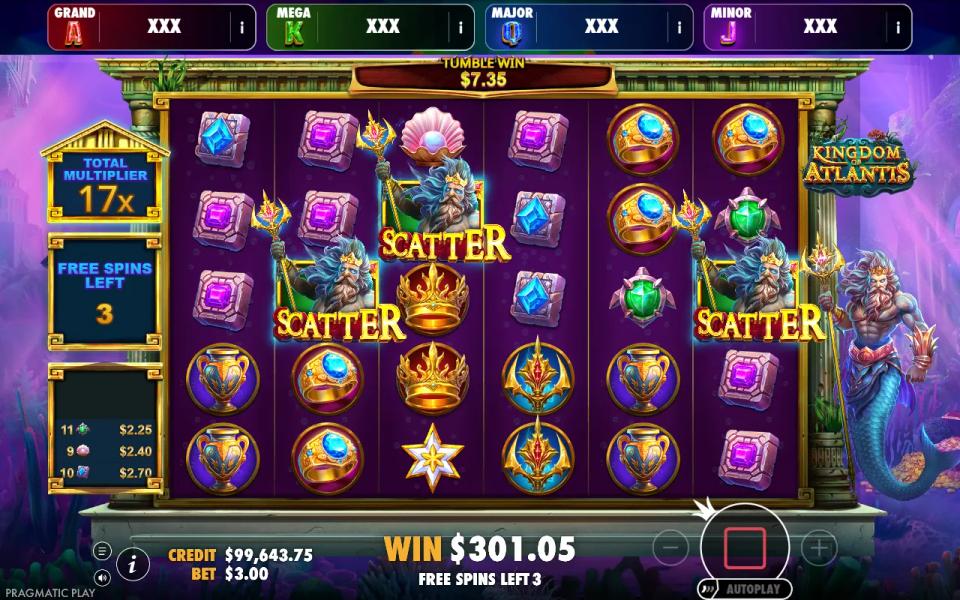
Inside the free spins, the math model shows its teeth. The game sets up a total multiplier meter on the left rail that doesn't reset between spins. Any gem that lands on a winning board gets added to this permanent total, and that running figure multiplies every subsequent win. Gems on losing spins are ignored, meaning the meter only climbs on spins that were already paying. This creates a highly specific rhythm where the round starts small, stays small, and relies entirely on a single late spin at a bloated multiplier to do all the heavy lifting.
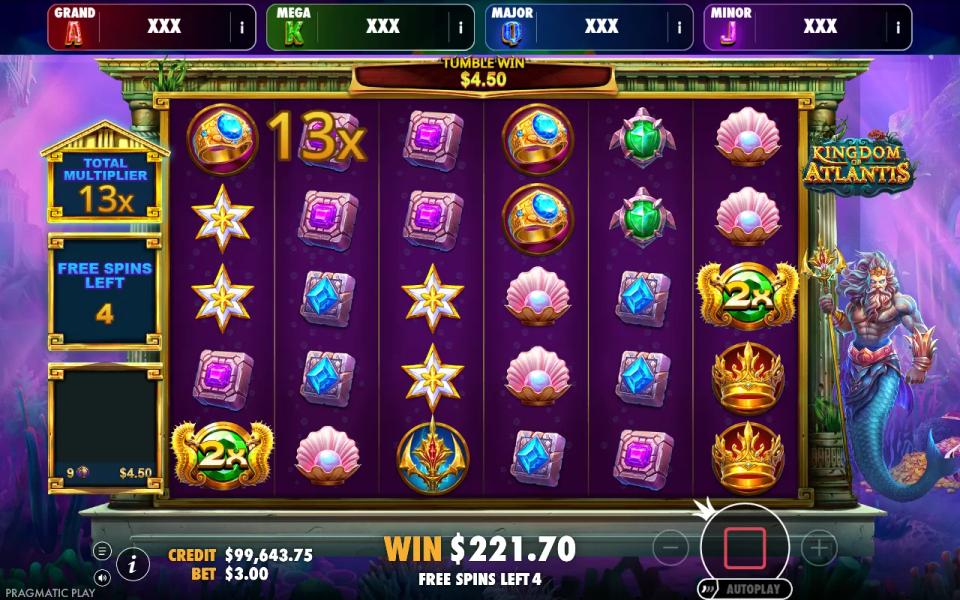
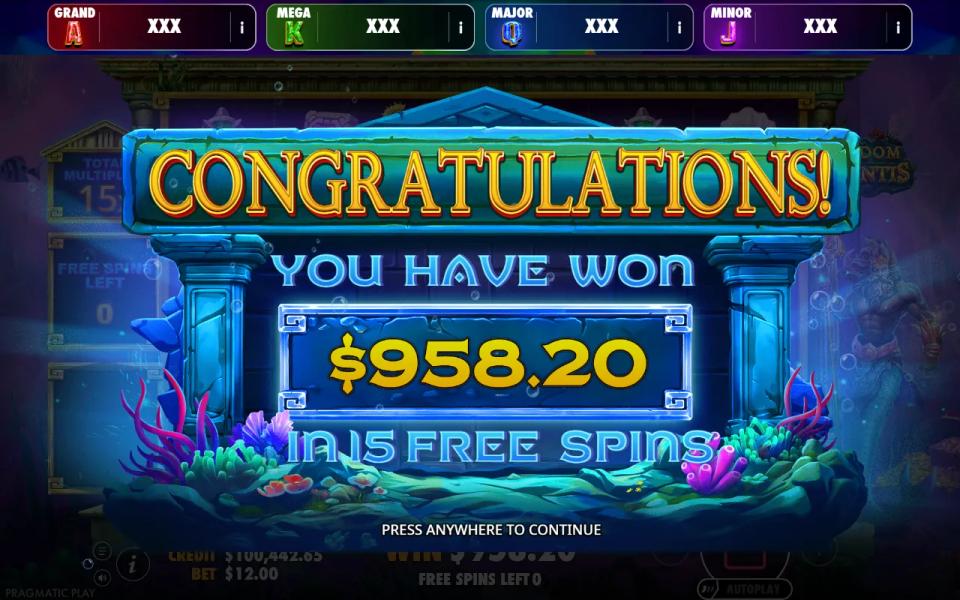
Buying a round for a 100x premium can leave you staring at a near-empty meter and a fraction of your money back with only a few spins left. A late hit can drag a doomed session back to around 80x, softening the blow but still losing money. Give the meter time, though, and it works exactly as designed. Landing three scatters adds five extra spins, and even if a retrigger hits at a 17x meter and delivers mostly dead drops, a single final connection can easily push the round well past 300x. The money is loaded heavily into the back end of the feature.
There's a quiet trap in the ante bet. Paying the 1.25x premium removes the buy button and doubles your chance of hitting the scatters, but it also silently drops the game's maximum win from 5,000x down to 4,000x. Nothing on the interface warns you that you're paying more per spin to chop a fifth off your best possible outcome.
The jackpot tax
The four jackpot tiers, Grand, Mega, Major, and Minor, sit above the reels, triggered entirely at random at the end of a base-game spin through a pick-and-match mini-game. In free play, they sit at zero, but on a funded account, that top pool can climb into the tens of thousands. Tiki Hut Megaways Jackpot Play proves that a jackpot bar from this studio doesn't always cost two full points of return, managing a 95.45% rate alongside a 9,000x ceiling. Fury of Anubis takes the exact same pay-anywhere board, rips the jackpot off entirely, and delivers double the ceiling at 96.52%. Kingdom of Atlantis is asking you to pay a massive RTP tax for a feature that isn't even always active.
The multiplier meter in the free spins is an excellent piece of tension-building, turning dead late spins into genuine cliffhangers when the rail is loaded. The 5,000x cap is exactly the studio's median target, representing 270 of their titles, making it a sturdy and realistic ceiling backed by achievable odds rather than a marketing mirage. But the structural contradictions are glaring. The base game is admitted filler, yet it's the only place the jackpot can trigger. You're paying a heavy premium on every spin to fund a jackpot pool, and the only way to actually make the math model pay is to buy a bonus round that explicitly turns the jackpot off.
Played and reviewed by the SlotsReach editorial team · Published 12 Sept 2026