Le Panda Town Slot Review
by Hacksaw GamingReleased Sep 9, 2026
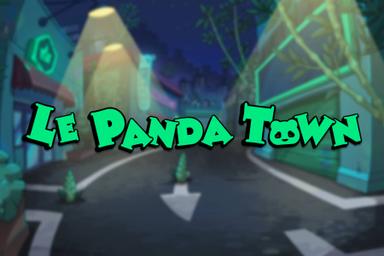
Hacksaw has pulled a panda hood over its raccoon mascot and dropped him on a neon street where bamboo is swallowing a coffee shop, and the art is genuinely funny. Underneath it is a game with a single dependency: every win leaves glowing squares that pay nothing at all until a rainbow turns up to cash them, and each of the four things you can buy is, in the end, a way of buying rainbows.

Specifications
| Game Type | Slots |
|---|---|
| RTP | 96.34% |
| Volatility | Medium |
| Max Win | 10,000x |
| Grid | 6x5 |
| Paylines | Cluster pays - 5 or more connected symbols anywhere on the grid |
| Min Bet | $0.1 |
| Max Bet | $100 |
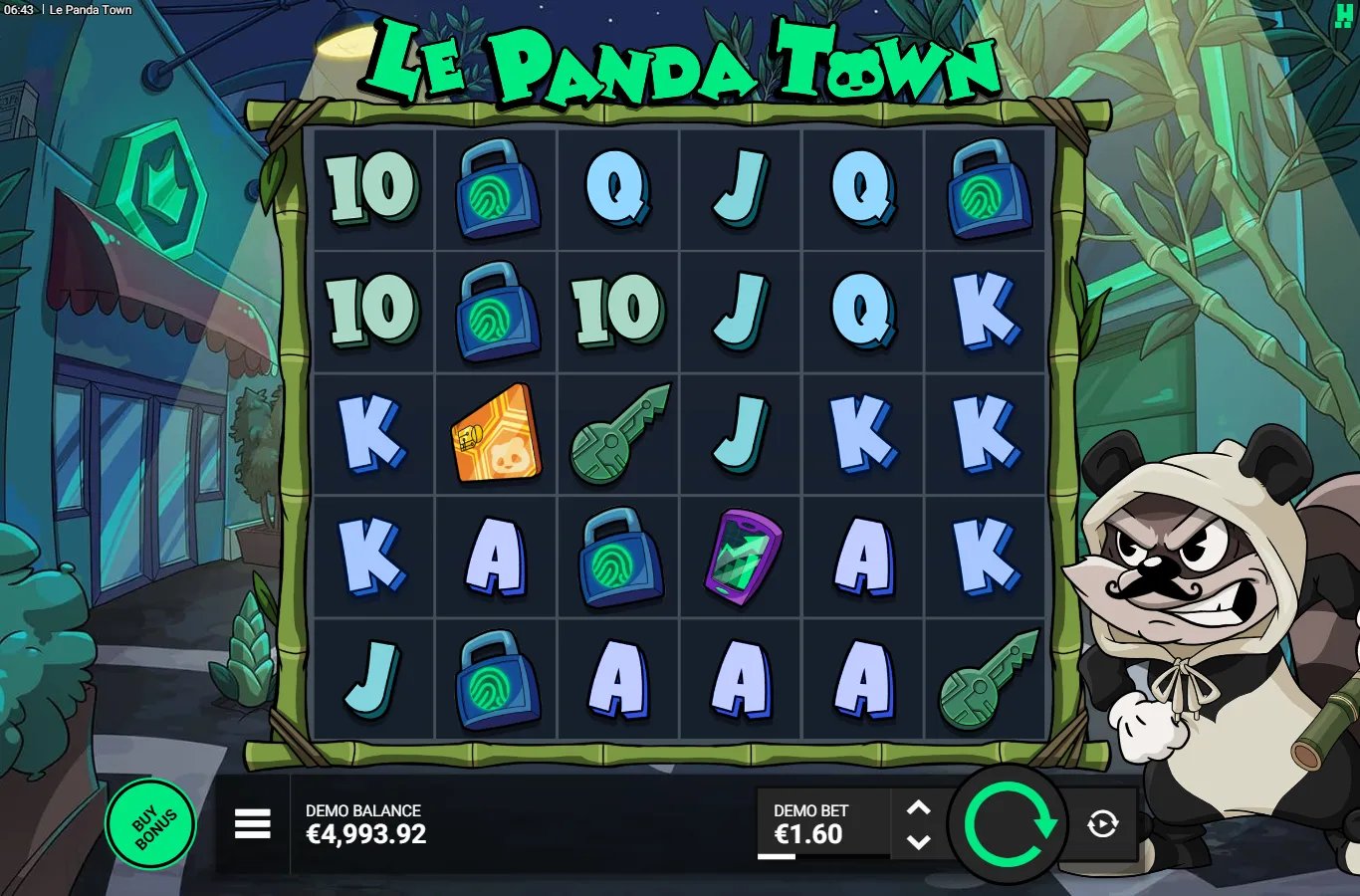
There is a specific rhythm to a studio finding a math model that works, and it usually involves beating that model into the grid until players stop clicking. Hacksaw Gaming has reached the point where they are just changing the wallpaper on the same room. The mascot for this particular lineage, a raccoon named Smokey, has now pulled a panda hood over his ears and taken over a neon street where bamboo chokes out an ONBUCKS coffee shop. The joke in the title is that there's no actual panda in sight. It's a sharp, funny piece of visual design that distracts you from the fact you are playing a game you likely already played last month.

The empty spaces behind the cascade
When a cluster hits on the six-by-five board, the cascade does something genuinely clever. It doesn't just remove the touching symbols that won, it strips every copy of that symbol from the entire grid, dropping a massive wave of fresh symbols into the gaps. The problem is what those clusters actually pay. A five-symbol royal cluster hands back a tenth of the stake, which is a low-paying wait that bleeds a balance dry. Even gathering thirteen of the top symbol across half the board pays 100x, which is a hundredth of the ceiling.
The symbols are just a delivery system for the real mechanic. Winning clusters leave marked squares behind them, and a Rainbow symbol is required to turn those squares into coins. If the round ends without a Rainbow, the marks vanish unpaid. You will frequently watch a Rainbow land on a board with no marks, light up, and do absolutely nothing while the win field stays empty.

Waiting for the right metal
When the mechanic actually connects, it operates on a strict hierarchy of coins. Bronze coins carry values from a fraction of the stake up to a modest multiple, Silver pushes up to twenty times the bet, and Gold stretches up to a massive five hundred times. There's also a Four-Leaf Clover that multiplies adjacent coins by up to ten, and a Pot of Gold that gathers everything on the grid and triggers the whole reveal again.
That combination is how you approach the 10,000x maximum win. A cap of that size is a sturdy target, and it sits at a respectable height for a medium volatility game with a 96.34% return. But hitting it requires all three pieces to land at once: Gold coins, a clover beside them, and a pot to sweep it all up. Most base game reveals operate strictly at the floor, filling the squares with Bronze coins that struggle to push past a single-figure return.

Buying the held squares
The buy menu is entirely about managing how long those marked squares stick around. You can pay three times the bet per spin to make a bonus five times likelier, though the paytable keeps paying at the ordinary bet level while you do it, so every cluster you hit is worth a third of what the price suggests. You can also buy a guaranteed Rainbow every spin for fifty times the bet, which is the honest price of the mechanic stated out loud.

The main features are split into two tiers. The 100x ticket buys eight free spins where marks accumulate until a Rainbow consumes them. The 250x ticket buys twelve free spins where the marks stay lit for the whole round, even after a Rainbow cashes them in, meaning the board gets progressively more valuable. There's a top mode that removes the dependency entirely by guaranteeing a Rainbow every spin with no Bronze coins, but it requires five scatters to hit naturally and the menu doesn't sell it.
The expensive ticket is the better product because it lets the board fill up, occasionally landing a Silver coin alongside a clover, though the multiplier can easily land clear of the coins you need it to boost. The cheaper buy is much more brutal. The starting eight free spins of accumulating marks can easily produce a single Rainbow's worth of Bronze and return less than a twentieth of the entry cost. The game at least has the decency to mock its own payouts, flashing closing cards where Smokey swears at you in French when a feature flops.

We have seen all of this before. Dragon's Pub runs the exact same marked squares, Rainbow, and Pot of Gold on the same board, with an identical return and ceiling, and it came out just weeks ago. Le Bandit started this exact lineage back in 2023, on the same board, with the same 96.34% and the same 10,000x. Le Panda Town is a well-designed clone for players who want to pay the premium for persistent marks, provided they can stomach the long walk through worthless royals to get there.
Played and reviewed by the SlotsReach editorial team · Published 9 Sept 2026