
Ashoka Eternal Slot by ELK Studios
by ELK StudiosReleased May 23, 2024
Free demo - play instantly in your browser
Ashoka's sequel swaps scatter pays for clusters on an expanding 5x7-to-7x9 grid. Same 25,000x ceiling, new multiplier wheel mechanic, mixed community reception. To spin Ashoka Eternal free without depositing, press "Free Play" below and the demo loads in your browser.
Specifications
| Game Type | Slots |
|---|---|
| RTP | 94% |
| Volatility | High |
| Max Win | 25,000x |
| Grid | 5x7 |
| Paylines | Cluster Pays (5+ connected symbols) |
| Min Bet | $0.2 |
| Max Bet | $100 |
| Hit Freq | 25% |
Ashoka Series
About Ashoka Eternal Slot
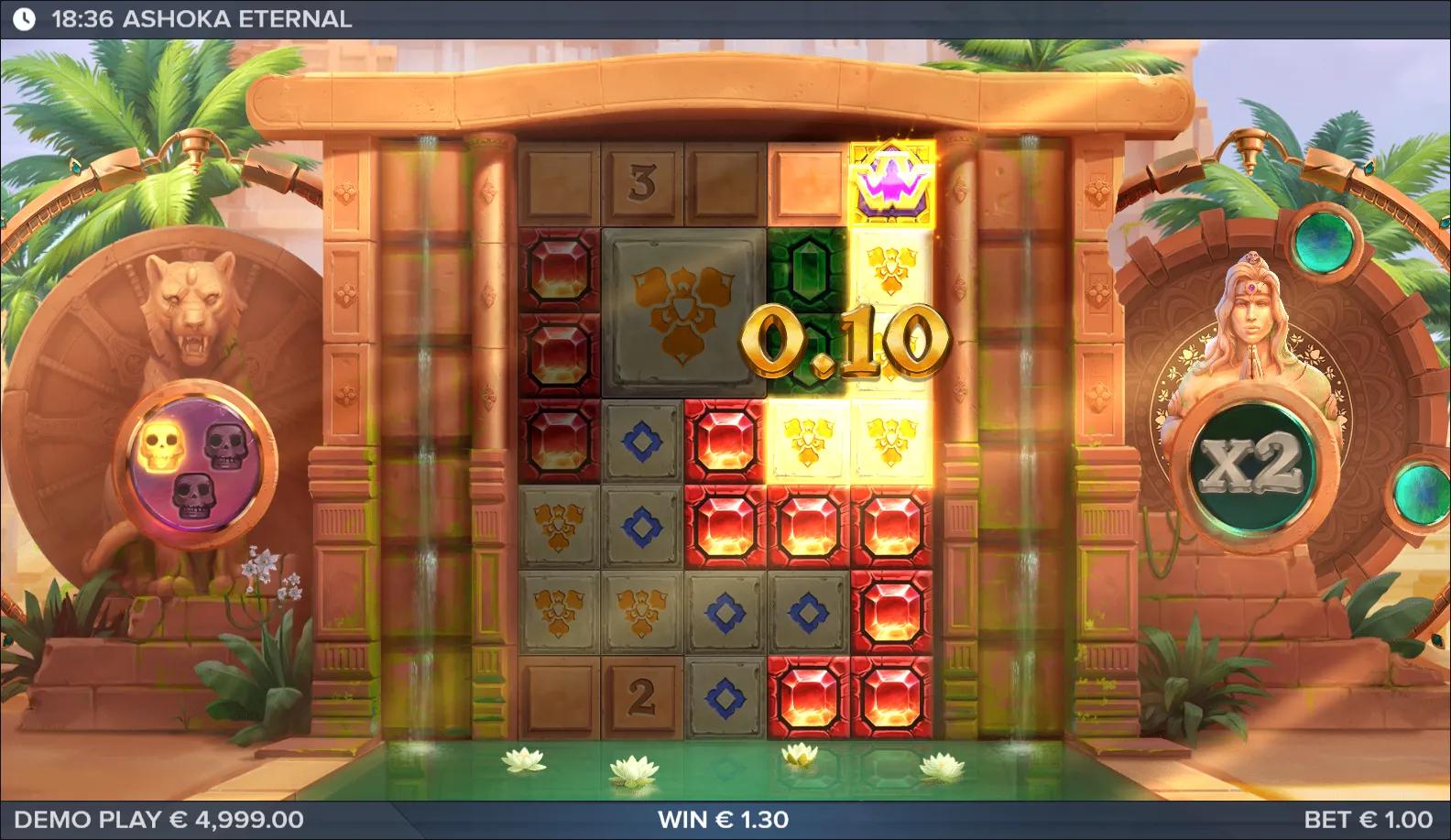
A 12-position multiplier wheel sits to the right of the grid, and it controls whether your wins mean anything. Each winning cluster rotates the wheel one step. If a multiplier activation symbol lands at the top when the wheel stops, the global multiplier applies. If it doesn't, your wins pay flat. You might chain four or five avalanches and the wheel just keeps ticking past activation, one position short every time. The original Ashoka let Super Multipliers accumulate reliably. This sequel replaced that with a gamble.
Blockers are the other half of the equation. Stone blocks seal the outer edges of the starting 5x7 grid, and clearing them by landing wins next to them opens the playfield to 7x7 and eventually 7x9. Each expansion level drops new blockers on the freshly opened edges, so you're chipping away again. Some of those blockers hide multiplier values (x2, x3, x5, x10, x25) that feed into the global multiplier total when cracked open. The payoff for clearing every last blocker at maximum size: the wheel locks and the multiplier stays active permanently for the rest of the round. The 500x Super Bonus X-iter buy targets exactly this scenario, doubling the wheel's activation rate so you're not constantly spinning past it.
Warm sandstone columns and palm trees border the expanding grid, with a white tiger carved into the left pillar and a prince medallion on the right. Gemstone symbols in red, green, and amber sit on gold-trimmed stone tiles, while the low-value blue and purple diamonds blend into the darker blocker stone. Wilds come in 1x1, 2x2, and 3x3 sizes, and Charged Wilds survive through 3 winning combinations before disappearing. In the bonus round those Charged Wilds persist between all 8 free drops, which is where they compound with the multiplier wheel to produce anything serious.
The Redrop symbol is new to this sequel. When avalanches run dry and no more wins appear, it picks a single symbol type and keeps all instances of it sticky while one fresh drop fills in around them. It's a second shot at connecting a cluster from a dead board, and in practice it triggers often enough to extend the occasional round past where it would normally end.
Reviewed by Arina, Slots Editor at Spinoxy Media Ltd.