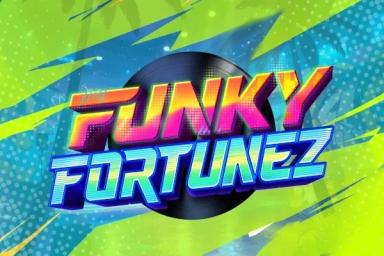
Funky Fortunez Slot Review
by PG SoftReleased Apr 20, 2026
Specifications
| Game Type | Slots |
|---|---|
| RTP | 96.75% |
| Volatility | Medium |
| Max Win | 2,000x |
| Grid | 4x4 |
| Paylines | Cluster Pays (3+ symbols touching horizontally or vertically) |
| Min Bet | $0.6 |
| Max Bet | $180 |
| Hit Freq | 36.9% |
Funky Fortunez squeezes a PG Soft cluster game onto a tiny four-by-four matrix, a small-board format the studio rarely touches. Of the massive catalogue we list from this studio, very few titles pay in clusters, and even fewer hand out instant cash prizes. So this online slot steps away from their usual shape to try something much more contained. It leans heavily into an urban music theme, complete with a turntable spin button and a crowd cheering in the background, but what it really wants to be is a game of memory. The board watches where you win, marks the ground, and tries to build cash on those exact spots. It's an interesting premise that completely changes how you look at a cascade, turning every drop into a question of whether the symbols will land exactly where they just left.
The math model runs on a 96.75% RTP and medium volatility. It carries a 36.90% hit rate, a 2,000x max win, and a bet ladder that starts at 0.60 and climbs to 180.
How the board remembers
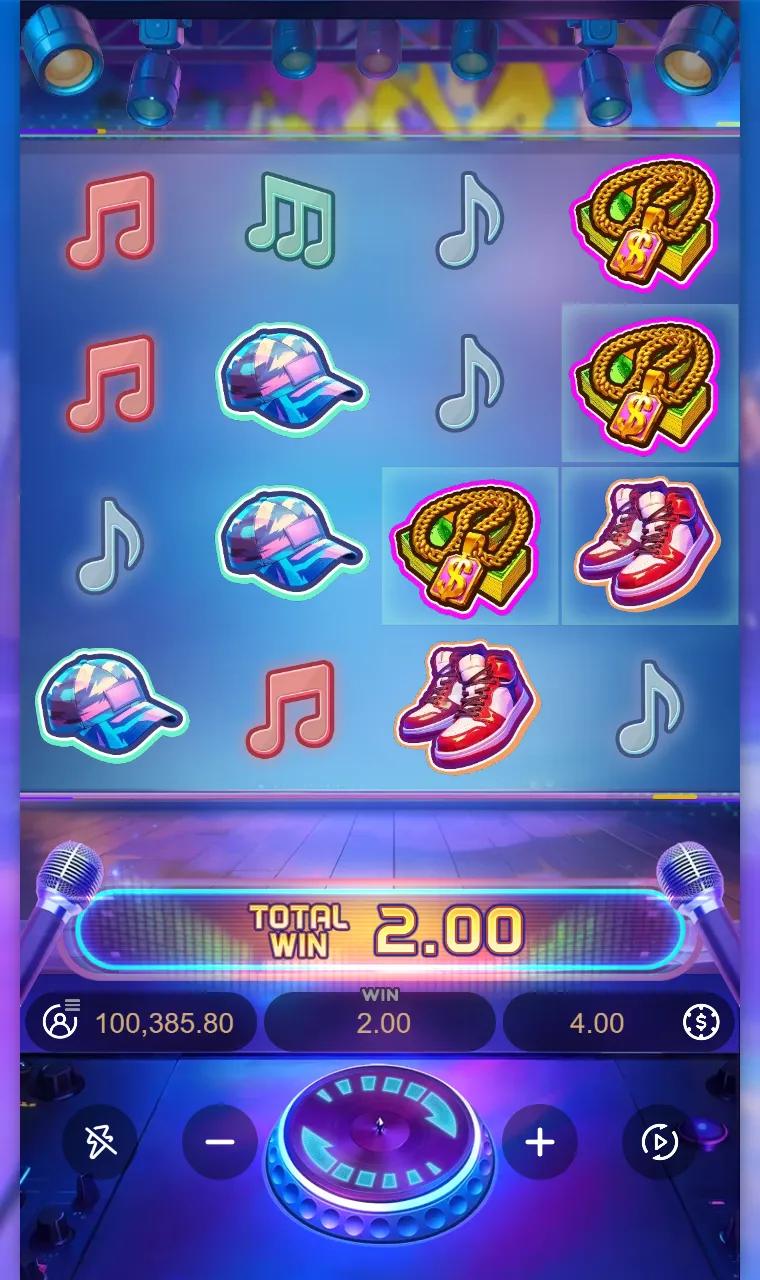
You need three or more matching symbols touching sideways or up and down to form a cluster. There are no wilds to bridge the gaps. Winning clusters trigger cascades, but the rule comes with a twist that strips the grid bare very quickly. When a cluster pays, every other copy of that symbol on the reels explodes with it. The cells involved in a win get marked. If a cascade drops a second win onto a marked cell, it turns into a Prize symbol. Once the cascades stop, every Prize on the layout pays its cash value on top of the cluster wins.
But in the base game, those marks wipe clean the moment the spin ends. Getting a cell to win twice requires a fresh cluster to land precisely on the corner the first one just cleared. When the board actually manages that trick, the reward is mostly loose change. A plain Prize pays between 0.2x and 8x, and it sits at the absolute minimum almost every time it appears. You can land three discs at once and still scrape back less than 3x the stake. The paytable underneath them offers very little cover, because every cluster of three, four, or five pays under the bet. Even the two top symbols need to cover at least twelve of the sixteen cells just to hit 5x. Because the layout is so small, twelve of a kind is a shorter reach than it would be on a massive matrix, and the payouts seem priced with that in mind.

Waiting for the scatters
Scatters pay nothing and refuse to join clusters, making them dead weight on a grid that only holds sixteen cells to begin with. Three scatters trigger ten free spins, and each extra one adds two more. Dropping two scatters slows the final column under a dramatic light, printing a tease under the reels. It looks sharp and feels close. But the studio's own figures put the free spins at arriving on fewer than one spin in a hundred, so that lit column is theatre most of the time. There's no bonus buy and no ante bet available, meaning you just have to pay the standard stake and wait.

Keeping the marks
Inside the free spins, the rule that ruins the main game is finally switched off. Marks and Prize symbols stay put until the round ends. Discs accumulate across the board, and every disc pays its cash value again on every winning free spin. Before they pay, they have a random chance to upgrade to a Gold disc worth 10x to 50x, or a Platinum disc worth 100x to 500x.
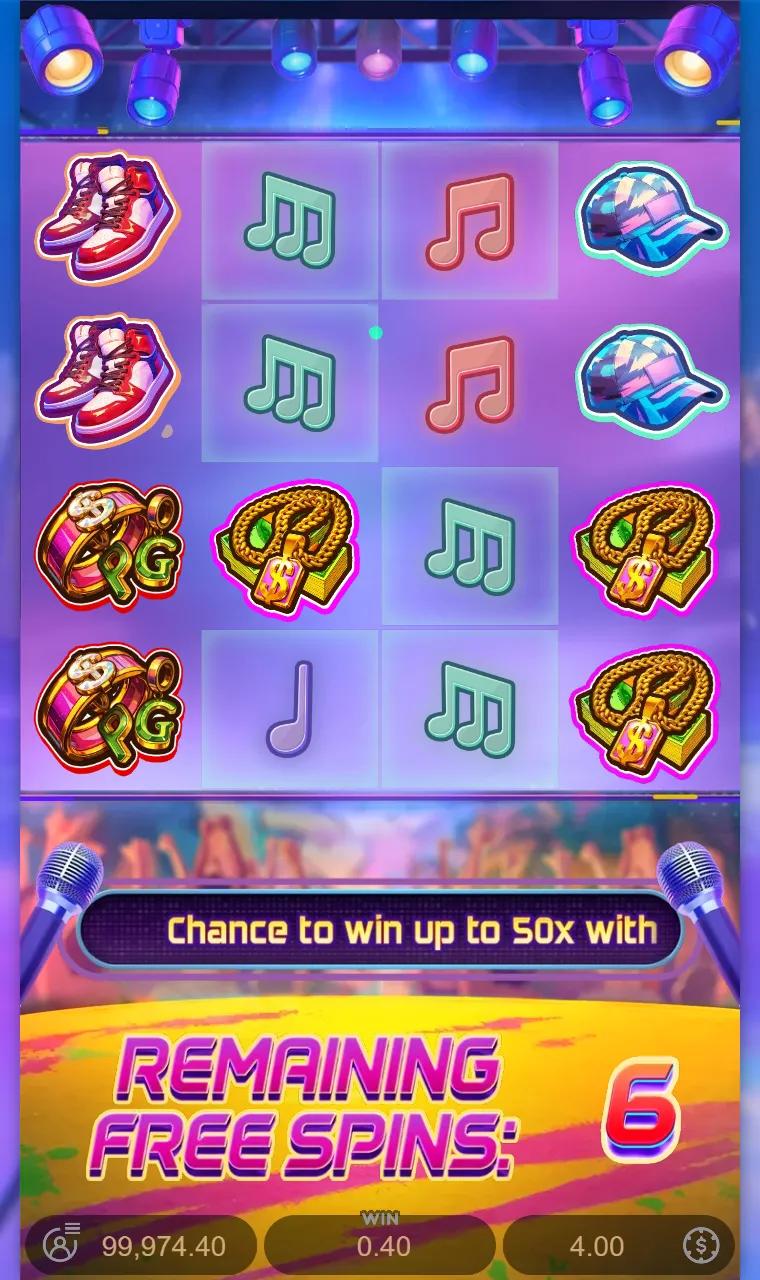
That sounds like a compounding setup, but it comes with a massive condition. A free spin with no cluster pays none of the held discs, no matter how many are sitting there. You can stack the middle reels completely full of persistent marks, and if the board around them goes dead and fails to form a cluster, the spin ends and pays nothing. The crowd cheers at an empty result. Because the feature depends entirely on a win to trigger the collection, half the layout can sit there holding cash that never actually pays. The real value of the round has very little to do with stacking discs. It relies almost entirely on hitting a random Platinum upgrade. A single 100x Platinum disc can carry a feature, while the plain discs around it sit at 0.2x and add almost nothing to the balance.
The mechanic will instantly remind anyone of Sugar Rush (Pragmatic Play), which also turns a spot that wins twice into something valuable. But where that competitor leaves a multiplier that doubles every time the spot wins again up to a 5,000x cap, Funky Fortunez leaves a flat cash disc that starts at 0.2x and has to be lucky to be anything else. It uses the same trigger but gives you a much shorter runway. And while the 2,000x max win is low for PG Soft, it's a verified reality rather than a mirage. The studio's own simulations reach it, meaning the cap describes something the release can actually do.

The turntable spin button is a nice touch, and the 36.90% hit rate means the slot pays something on roughly one spin in three. But a hit rate that high mostly buys you spins that pay less than they cost. Monkeys Wild Party (PG Soft) runs the exact same hit rate and medium volatility, but it gives you a 10,000x cap on a larger grid. Funky Fortunez asks you to fund a slow base game, waiting for a feature that barely ever arrives. And when it finally does, the persistent discs are just a setup for a random upgrade you might never see.
Played and reviewed by the SlotsReach editorial team · Published 17 Sept 2026