SlotsReach

Stack'em Slot Review

by Hacksaw GamingReleased May 25, 2021

Free demo - play instantly in your browser

Cluster pays slot with a reverse cascade - losers get removed, winners stack down with reel multipliers up to 30x. Free spins build a progressive total multiplier.
Demo player curtain

Specifications

Game TypeSlots
RTP96.2%
VolatilityHigh
Max Win10,000x
Grid5x6
PaylinesCluster Pays (5+ connected symbols)
Min Bet$0.2
Max Bet$100
Themes
Features

Stack'em Slot Overview

Every cascading slot deletes the winners. Stack'em deletes the losers.

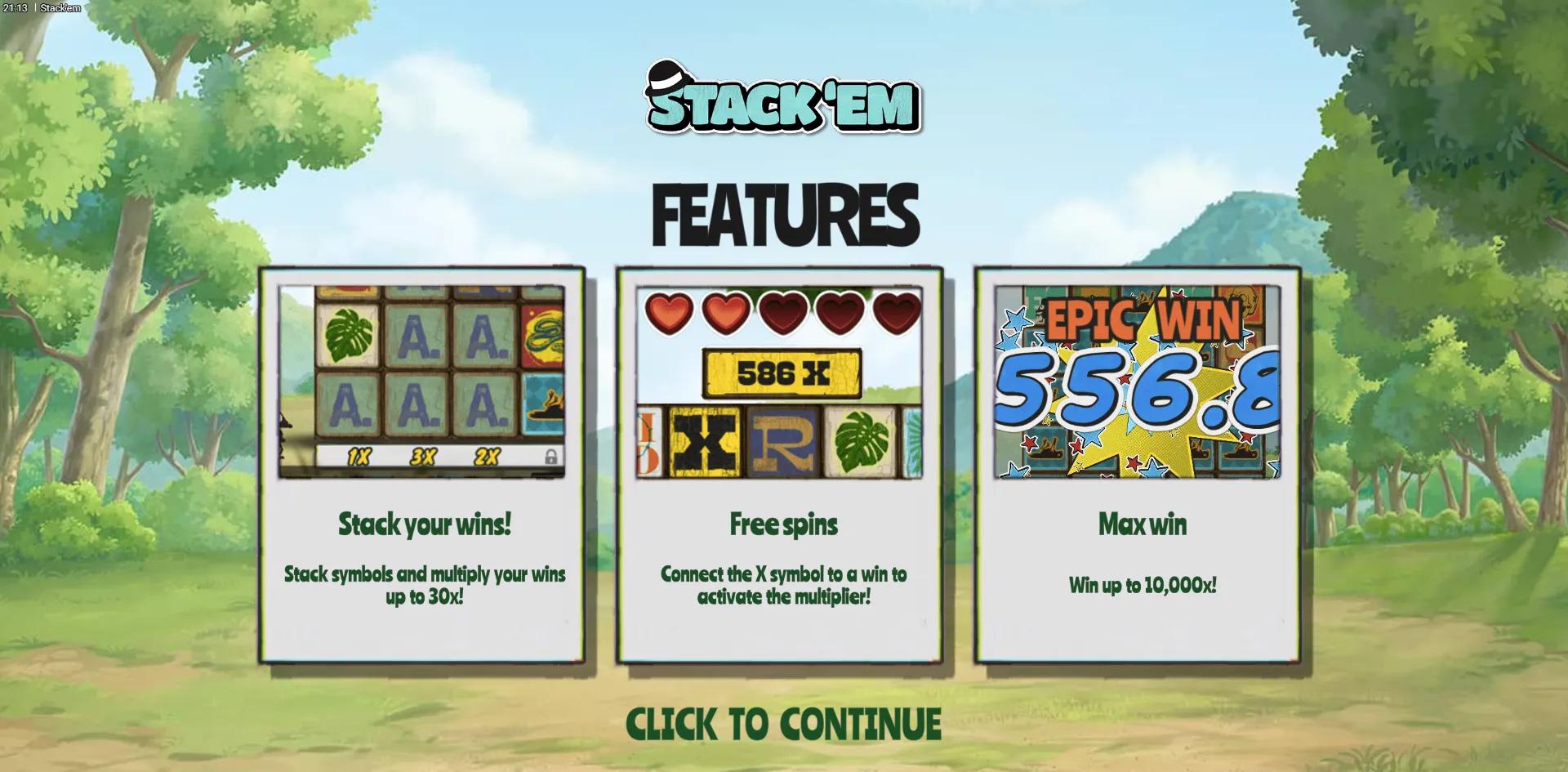
A winning cluster does not pay and vanish here. It pays, survives, drops to the floor of the grid and becomes part of the pile that everything after it lands on. The number under each reel is simply a count of how many winning symbols are stacked there, and that count is your multiplier.

One inversion, and a cluster game turns into something nobody else is doing. 5x6 cluster pays, 96.20%, 10,000x, and the follow-up to the very first slot this studio ever released.

Theme & Design

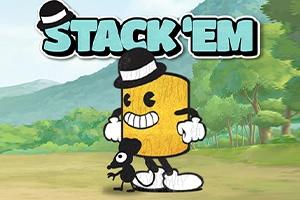
Hand-drawn vintage cartoon, the sort of thing that predates colour television. Canny the Can, top hat and permanent grin, is the studio's mascot and has been since their debut, and this time he has brought Mona the Mouse along.

The setting is a bright garden, the symbols are chunky blocks, and hearts sit above the reels counting your remaining free spins. The multiplier under each reel column is the one piece of interface that matters, and it is placed exactly where you look while symbols are falling.

The game introduces itself with the enthusiasm of a returning sitcom: Canny the Can is back, and this time he brought his friend Mona the Mouse with him.

Symbols & Paytable

SymbolPayout
Thumbs Up, 25 or more200xThe top symbol, named in the game's own max-win disclosure
Thumbs Up, 20 to 24100xHalf the top tier for five fewer symbols
Other high symbols, 25 or more100xFour of them, all paying the same
Low symbols, 25 or more25xFive of them, all identical
Any symbol, 5 to 60.1x to 0.5xThe smallest cluster that pays anything

Features & How They Work

The cascade runs backwards

After every win the non-winning symbols are removed and the winning symbols are kept, dropping to the bottom of the grid.

Read that again, because it is the opposite of what cascading slots do. The cluster you just got paid for is still there. It has fallen to the floor, and the next drop lands on top of it.

Below each reel is a number showing how many winning symbols are stacked in that column, and a winning cluster is multiplied by the total of the multipliers it sits above. The game's own example: a cluster sitting above 1x, 3x and 2x has those added to 6x, and the cluster pays six times its value. This carries on for as long as you keep stacking wins.

Wide clusters collect more than tall ones

Here is the bit nobody mentions. The multiplier only counts the reels a cluster actually sits above.

So a cluster spread across all five columns picks up all five stacks. A cluster of the same size crammed into two columns picks up two. Same number of symbols, wildly different payout.

Six rows means a reel can hold at most six stacked winners, so a single reel caps at 6x and the five together cap at 30x. That is the ceiling the game advertises, and it takes a full board of survivors to reach it.

The maximum win is a chain, not a hit

The studio's own disclosure spells out the route. A cluster of Thumbs Up symbols lands, and then through subsequent drops it grows, being paid again after each increase with the sum of the multipliers below the reels.

Work out the biggest single payment available in that sequence. The top cluster tier pays 200x, the multiplier ceiling is 30x, and 200 multiplied by 30 is 6,000x.

That is only 60% of the 10,000x cap. Which means roughly four-tenths of a maximum win comes from the smaller payouts the same cluster earned on the way up, the 100x tier at twenty-odd symbols, the 30x tier before that, and so on down. You do not hit the maximum here. You add up to it.

The bonus switches the stacking off

Three scatters award five free spins, shown as hearts above the reels, and the round runs until no hearts remain.

And then the rules say something disappointing: in free spins, all symbols are removed between each spin. No survivors, no pile, no reel multipliers. The one thing this game does that no other game does is simply turned off for the bonus.

What replaces it is a total multiplier that grows by the size of every winning cluster, so a six-symbol win adds six to the running total. It works fine. It is also the same accumulating counter half the industry ships, bolted onto a base game that was genuinely original.

The total is worthless until an X connects

Building that total is automatic. Cashing it is not.

The X symbol appears at random during free spins, and only clusters that connect with it are multiplied by the figure above the reels. Every other win pays flat.

So you can spend a long round pushing the total up to 300 and receive none of it, because no X ever landed touching a win. That single condition is what makes the round tense, and it means the moment worth watching is not a big cluster, it is an X arriving next to one.

Mystery boxes are worth more late

The question mark symbol awards one of three things: between two and five extra lives, an addition of 1, 2, 5, 10, 25 or 50 to the total multiplier, or a multiplication of the total by 2, 3, 4 or 5.

Notice the asymmetry. The additions stop at 50. The multiplications go to five times.

Early in a round, when the total is small, both are worth roughly nothing. Late in a round with a total of 300, a plus 50 is a shrug and a times five is 1,500. The same symbol changes value enormously depending on when it turns up.

Screenshots

Stack'em by Hacksaw Gaming - Gameplay Screenshot

How Stack'em Plays

The base game is a builder, and it is oddly calming. Symbols fall, the losers evaporate, the winners settle into the floor, and those little numbers under each column tick upward. A long stacking run has a rhythm that most volatile slots never bother developing.

It is also unforgiving when nothing connects. You need a cluster before anything begins accumulating, and a cold stretch here is genuinely dead because there is no pile to build on and nothing to watch.

The bonus is the frustrating part. Clearing the board between spins throws away the mechanic the game is named after, and what is left is a competent accumulating multiplier round with one clever condition attached. That condition does a lot of work, because an X connecting is worth far more drama than another win would be.

Some historical context helps too. This followed Stick'Em, the studio's first ever slot, and it is where they clearly started getting ambitious. Whatever else it is, it is a studio finding out what it could do.

Pros & Cons

Pros

  • The cascade is inverted, keeping winners and removing losers, which almost nothing else does
  • Surviving winners become the multiplier for whatever lands on top of them
  • Wide clusters collect from more reels than tall ones, which gives the geometry real weight
  • Cluster tiers run all the way to 25 or more symbols, paying 200x for the top symbol
  • The X symbol condition gives the bonus a genuine cash-out moment
  • Mystery boxes can multiply the accumulated total by up to five
  • Free spins can be bought directly

Cons

  • Free spins clear the board between spins, abandoning the stacking mechanic entirely
  • The accumulated total pays nothing unless an X symbol connects with a win
  • Cold stretches are completely dead, since nothing builds without a cluster first
  • Only five free spins to begin with, so the round depends heavily on mystery boxes
  • No hit frequency, maximum win odds or buy price is published

Is Stack'em Worth Playing?

8/10

Removing the losers instead of the winners is such a small change to describe and such a large one to play. A cluster that pays and stays turns every win into foundation for the next, and watching the numbers under each column climb as the floor fills with survivors is a slower, more architectural pleasure than the usual cascade fireworks. The detail that makes it interesting rather than merely different is the geometry: a cluster only collects from the reels it sits above, so spreading wide beats stacking tall.

The maximum win rewards a bit of arithmetic too. The largest single payment the chain can produce is 200x at 30x, which is 6,000x, well short of the 10,000x cap. So a maximum win is not one enormous cluster. It is the whole growth sequence added together, every intermediate payout included.

What stops this being a nine is the bonus. Clearing all symbols between free spins deletes the mechanic the game is built on and hands you a perfectly standard accumulating counter instead. The X symbol condition rescues it, because a total that only pays when an X touches a win is real tension rather than a number going up, but it is still a conventional round attached to an unconventional game.

Five years on it still plays better than most cluster slots released since, which says something about how good the central idea was.

Frequently Asked Questions

How is the stacking different from a normal cascade?

It is reversed. Non-winning symbols are removed after each win while the winning symbols are kept and dropped to the bottom of the grid, where they become part of the multiplier for whatever lands on top.

How are the reel multipliers calculated?

The number below each reel is a count of the winning symbols stacked in that column. A winning cluster is multiplied by the total of the multipliers it sits above, so a cluster over 1x, 3x and 2x is multiplied by 6x.

What is the highest multiplier possible?

Six rows means a reel can hold at most six stacked winners, so a single reel caps at 6x and all five together cap at 30x.

How is the maximum win reached?

The studio describes a cluster of Thumbs Up symbols growing through subsequent drops and being paid after each increase. The largest single payment available is the 200x top tier at the 30x ceiling, which is 6,000x, so the rest of the 10,000x comes from the smaller payouts the same cluster earned as it grew.

Do the reel multipliers carry into free spins?

No. All symbols are removed between each free spin, so there is no stacking and no reel multipliers. Free spins instead run a single total multiplier that increases by the size of each winning cluster.

Why does the total multiplier sometimes pay nothing?

Because it only applies to clusters that connect with the X symbol. Every other win pays flat, so a large accumulated total can go entirely uncashed if no X lands touching a win.

What do the mystery symbols award?

Two to five extra lives, an addition of 1, 2, 5, 10, 25 or 50 to the total multiplier, or a multiplication of the total by 2, 3, 4 or 5.

Can you play Stack'em for free, and what is the age limit?

The demo runs on play money in the browser with no deposit or account. Real-money play is restricted to players aged 18 or over, or 21 in some jurisdictions.
Arina

Reviewed by Arina, PR & Content Manager

PR & Content Manager at SlotsReach

Published 8 Aug 2026 · Updated 8 Aug 2026