Toro Slots
9 free demo slots in the Toro series
ELK Studios' charging bull series spans nine years and eight games. The walking wild Toro mechanic ties them all together, but the bonus features change quite a bit from game to game. Wild Toro and Wild Toro 2 are the highlights of the collection. Just keep the payout rates in mind. The newer releases run at 94% RTP, while the original still sits at 96.4%.
ELK Studios
ELK Studios
ELK Studios
ELK Studios
ELK Studios
ELK Studios
ELK Studios
ELK Studios

ELK Studios
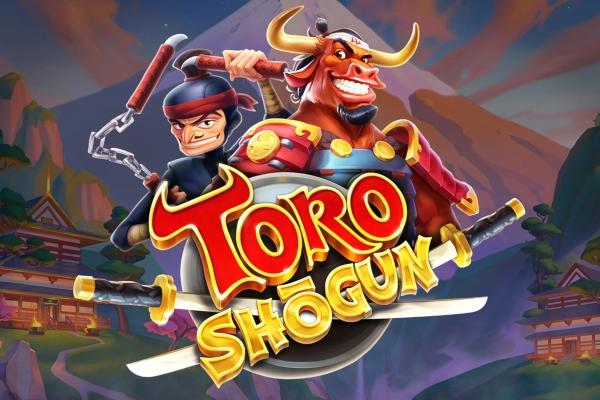
ELK Studios has released ten Toro games over nine years. If you look at the stats on this page, they seem almost identical. Most sit at 94% RTP, high volatility, and a 10,000x max win. But that uniform look hides how different these games actually are. Each one runs on a completely different engine. Book of Toro uses expanding symbols, Toro Shogun has cascading wins on a growing grid, Gladiatoro is a coin-collection game, and Toro 911 focuses entirely on a chain of respins.
You can spot the odd one out by looking at the max win. Toro Shogun goes up to 25,000x because its mechanics stack up in a way the standard 10,000x games do not. Two games are missing from this list, Wild Toro II and Buffalo Toro, which holds the record at 50,000x. You should also know that a higher RTP does not mean a better game. Book of Toro and Toro 7s both sit at 95%, but they are easily the weakest entries in the franchise.
Same bull, completely different games
The most important thing to know before you pick a game is that ELK does not just reskin the original. The themes change from Egyptian tombs to feudal Japan or a police chase, but the actual mechanics change just as much.
The core of the series is the walking wild chase. Wild Toro, Wild Toro II, and Toro 911 all rely on Toro landing on the right side of the screen and marching to the left, giving you respins as he goes. If he hits a Matador, he charges and leaves wild symbols behind. Wild Toro II made the grid bigger and added multiplier wilds. Toro 911 did the opposite. It stripped away all the bonus rounds and free spins to focus entirely on Toro flattening Matadors and absorbing their multipliers.
Toro Shogun takes a different route. It uses cascading wins on a grid that grows during the bonus rounds. Winning symbols disappear, new ones drop in, and a multiplier goes up with every cascade. It has five different systems working together, which is why it has that 25,000x max win.
Gladiatoro is a standard coin-collection game. Coins land with cash values, character symbols interact with them, and you get a jackpot if you collect thirty coins. Dozens of other slots do exactly this.
Thoro brings in an instant-prize system. If you land enough lightning symbols on the middle reels, you can win the 10,000x max win directly without needing regular line hits. It plays unlike anything else in the series.
Book of Toro just drops the bull into a standard expanding-symbol game, much like Book of Dead. Toro 7s abandons the franchise formula completely. It is a basic 3x3 grid with no bull chase and no matadors. It only shares the name.
Why the payouts feel lower these days
The original Wild Toro launched with a 96.4% RTP. That was generous back then, and it remains the highest in the series. The three games released in 2021 dropped to 95%. Every game from 2022 onward locked in at 94%.
ELK claims they did this to be honest. Other studios advertise 96% but let casinos run the games at 94%, so ELK decided to just publish the lower number. Whether you buy that reasoning or not, the math is what it is. Toro games pay back about two and a half percent less than they did nine years ago. This drop happened around the same time Light & Wonder bought ELK. Some newer games even let the casino choose the RTP, which goes against the fixed-math reputation ELK used to have.
Players notice the difference. ELK gets a lot of praise for their art, animation, and sound design. But the math models get a lot of complaints. Big wins above 500x are rare here, and massive payouts happen far less often than they do on similar games from Hacksaw or Nolimit City.
Which ones are actually worth playing
There are two clear standouts. Wild Toro II is the best version of the core formula. It has expanding reels, multiplier wilds, a dramatic chase, and a decent 95% RTP. Toro Shogun is the ambitious pick. With its cascading engine and progressive multipliers, it is the only game in the standard lineup with real max win potential.
The low point of the series happened in late 2021 when ELK rushed out three games in two months. Book of Toro is just a generic copy of older games. Toro 7s is the worst of the bunch. It is a basic classic slot with a low hit rate and nothing that makes a Toro game fun. Gladiatoro is fine but easy to forget.
Thoro and Toro 911 show some real creativity. Thoro has a clever instant-pay system, and Toro 911 strips the walking wild concept down to its best parts. Both of them are just held back by that 94% math model.
Right now, ELK seems focused on other things. Their Pirots series is winning awards and getting all the attention. Wild Toro 3 is scheduled for May 2026, but for now, the parrots have replaced the bull as the studio's main focus.